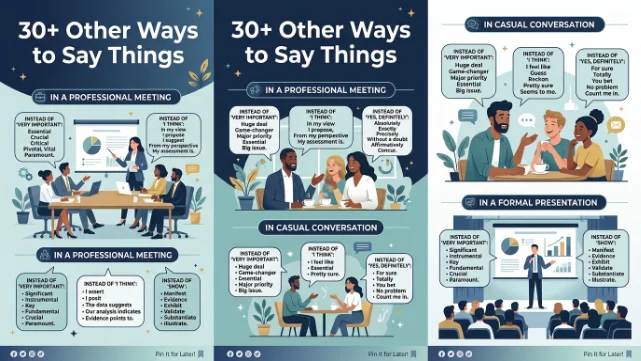
Looking for other ways to say things? Here are 5 top alternatives: items, objects, matters, subjects, and elements. Each alternative fits different contexts and levels of formality.
“Things” is one of the most overused words in the English language. While it’s convenient and widely understood, relying on it too heavily can make your speech and writing sound vague, repetitive, and unsophisticated. Knowing alternatives to things will dramatically improve your clarity and precision.
Learning other ways to say things helps you express excitement in English with greater accuracy while adapting your vocabulary to professional, academic, and casual settings. This comprehensive guide will give you 30+ powerful alternatives with real-world examples.
Quick Categories Section
Formal Alternatives to “Things”
- Items
- Objects
- Matters
- Subjects
- Elements
- Components
- Assets
- Possessions
Casual Alternatives
- Stuff
- Bits
- Pieces
- Goodies
- Trinkets
- Gear
- Kinds of stuff
Professional Alternatives
- Materials
- Resources
- Merchandise
- Inventory
- Supplies
- Equipment
- Articles
- Commodities
Informal Expressions
- Junk
- Clutter
- Crap (vulgar)
- Dodads
- Gizmos
- Knickknacks
- Thingamajigs
Pro Tips Box 💡
Pro Tip: When choosing from these alternatives to things, consider whether you need to specify physical objects, abstract concepts, or general matters. Precision always improves clarity.
Common Mistakes Section
- Using “things” to refer to everything in formal writing
- ❌ “The report discussed many things regarding company policy.”
- ✅ “The report discussed several matters regarding company policy.”
- Overusing “things” in academic papers
- ❌ “The study examined various things that affect learning.”
- ✅ “The study examined various factors that affect learning.”
- Using vague “things” in professional emails
- ❌ “Please bring the things you need for the meeting.”
- ✅ “Please bring the materials you need for the meeting.”
- Confusing physical and abstract “things”
- ❌ “We need to organize all the things for the conference.”
- ✅ “We need to organize all the materials for the conference.”
- Using “things” repeatedly in the same paragraph
- ❌ “We need to discuss several things. These things are important. The things we talked about…”
- ✅ “We need to discuss several matters. These items are important. The topics we addressed…”
What Does “Things” Mean?
Things is a general noun referring to objects, items, matters, subjects, or concepts that are not named specifically. In English grammar, it functions as a plural noun and can refer to physical objects, abstract ideas, activities, or situations.
Example: “We need to discuss a few things before we proceed.”
When to Use “Things”
- Spoken: Everyday conversations, casual chats
- Written: Personal notes, social media, informal emails
- Formal: Avoid in professional writing
- Professional: Use specific professional reaction phrases like “materials” or “resources” instead
Is It Professional or Polite to Say “Things”?
The word “things” is polite but not professional in most business or academic contexts. It creates vagueness and reduces credibility.
Example: “We need to discuss a few things about the project.” (Acceptable but weak)
Better: “We need to discuss several key elements regarding the project.”
Polite? ✔️ Yes
Professional? ❌ No (in most cases)
Pros and Cons of Using “Things”
Pros
- Simple and universally understood
- Quick and easy to use
- Covers broad categories
- Natural in casual speech
Cons
- Too vague for professional writing
- Overused and repetitive
- Lacks precision and clarity
- Can sound lazy or unprepared
Other Ways to Say “Things” (With Examples)
These alternatives to things will help you sound more precise, professional, and fluent in English. Use them according to tone, context, and audience.
1. Phrase: Items
Meaning: Individual objects or pieces.
Explanation: A straightforward, neutral alternative for physical objects or listed elements.
Example Sentence: “Please place all items in the designated storage area.”
Best Use: Lists and inventories
Worst Use: Abstract concepts
Tone: Neutral, precise
Context Variability: Professional/Casual
2. Phrase: Objects
Meaning: Physical items that can be seen or touched.
Explanation: Emphasizes the tangible nature of the items mentioned.
Example Sentence: “The museum displayed ancient objects from Egyptian civilization.”
Best Use: Physical descriptions
Worst Use: Abstract discussions
Tone: Specific, descriptive
Context Variability: Formal/Casual
3. Phrase: Matters
Meaning: Topics, issues, or affairs requiring attention.
Explanation: Used for abstract subjects, especially in professional contexts.
Example Sentence: “We need to address several matters during today’s meeting.”
Best Use: Professional discussions
Worst Use: Physical objects
Tone: Professional, serious
Context Variability: Professional/Formal
4. Phrase: Subjects
Meaning: Topics of discussion, study, or interest.
Explanation: Perfect for academic, educational, or discussion contexts.
Example Sentence: “The training covered several important subjects.”
Best Use: Educational contexts
Worst Use: Physical items
Tone: Educational, formal
Context Variability: Professional
5. Phrase: Elements
Meaning: Individual parts or components of a larger whole.
Explanation: Suggests that the “things” are essential building blocks.
Example Sentence: “We considered all elements of the proposal before approving it.”
Best Use: Complex topics
Worst Use: General physical objects
Tone: Analytical, precise
Context Variability: Professional/Formal
6. Phrase: Stuff
Meaning: General, unspecified items or materials.
Explanation: Extremely casual alternative for “things” used in everyday conversation.
Example Sentence: “Can you help me move this stuff to the other room?”
Best Use: Casual conversations
Worst Use: Professional writing
Tone: Casual, informal
Context Variability: Casual only
7. Phrase: Bits
Meaning: Small pieces, parts, or items.
Explanation: Often used to refer to a collection of small items.
Example Sentence: “I have a few bits I need to take to the office.”
Best Use: Small items
Worst Use: Important matters
Tone: Casual, friendly
Context Variability: Informal/Casual
8. Phrase: Pieces
Meaning: Individual parts or units of something.
Explanation: Useful for items that belong to a set or collection.
Example Sentence: “We found all the pieces needed for the assembly.”
Best Use: Puzzle pieces, furniture parts
Worst Use: Abstract concepts
Tone: Neutral, descriptive
Context Variability: Casual/Professional
9. Phrase: Components
Meaning: Individual parts that make up a larger system or whole.
Explanation: Highly professional term for parts of a system or mechanism.
Example Sentence: “The IT team checked all components of the network before launch.”
Best Use: Technical contexts
Worst Use: Everyday conversation
Tone: Technical, precise
Context Variability: Professional
10. Phrase: Assets
Meaning: Valuable items, resources, or qualities.
Explanation: Used in business, financial, and professional contexts.
Example Sentence: “The company liquidated some assets to cover expenses.”
Best Use: Business and finance
Worst Use: Personal, casual contexts
Tone: Professional, serious
Context Variability: Professional
11. Phrase: Materials
Meaning: Items, supplies, or substances needed for a purpose.
Explanation: Common in educational and workplace settings.
Example Sentence: “Please ensure all materials are ready before the workshop begins.”
Best Use: Workshops, classes
Worst Use: Abstract discussions
Tone: Practical, neutral
Context Variability: Professional/Casual
12. Phrase: Resources
Meaning: Assets, supplies, or information that can be utilized.
Explanation: Professional term often used in business and education.
Example Sentence: “We allocated additional resources to complete the project on time.”
Best Use: Business and education
Worst Use: Personal items
Tone: Professional, strategic
Context Variability: Professional
13. Phrase: Merchandise
Meaning: Goods for sale or commercial products.
Explanation: Specific to retail, sales, and business contexts.
Example Sentence: “The store received new merchandise this morning.”
Best Use: Retail contexts
Worst Use: Non-commercial items
Tone: Business, commercial
Context Variability: Professional
14. Phrase: Inventory
Meaning: Items held in stock or the total supply of goods.
Explanation: Used for tracking supplies in business contexts.
Example Sentence: “We need to update the inventory before the end of the quarter.”
Best Use: Stock management
Worst Use: Personal items
Tone: Business, organized
Context Variability: Professional
15. Phrase: Supplies
Meaning: Items provided for a specific purpose or use.
Explanation: Common in workplace and educational contexts.
Example Sentence: “The office supplies need to be reordered this week.”
Best Use: Workplace needs
Worst Use: Abstract concepts
Tone: Practical, functional
Context Variability: Professional/Casual
16. Phrase: Equipment
Meaning: Tools, machinery, or gear needed for specific activities.
Explanation: Refers to functional, often technical items.
Example Sentence: “All equipment must be checked before the event.”
Best Use: Tools and machinery
Worst Use: Abstract matters
Tone: Technical, neutral
Context Variability: Professional
17. Phrase: Articles
Meaning: Individual items or objects, often in professional contexts.
Explanation: Formal term used in law, business, and academia.
Example Sentence: “The articles mentioned in the contract must be reviewed.”
Best Use: Legal and business
Worst Use: Casual settings
Tone: Formal, legal
Context Variability: Formal
18. Phrase: Commodities
Meaning: Raw materials or primary agricultural products traded.
Explanation: Used in economics and business.
Example Sentence: “Global commodity prices have risen significantly this year.”
Best Use: Economics and trade
Worst Use: General conversation
Tone: Formal, economic
Context Variability: Professional/Formal
19. Phrase: Possessions
Meaning: Items that someone owns.
Explanation: Emphasizes ownership and personal belongings.
Example Sentence: “We packed all our possessions before moving to the new house.”
Best Use: Personal belongings
Worst Use: Abstract matters
Tone: Neutral, personal
Context Variability: Casual/Professional
20. Phrase: Belongings
Meaning: Personal items that belong to someone.
Explanation: Warm, personal term for items owned by someone.
Example Sentence: “Please collect your belongings before leaving the venue.”
Best Use: Personal items
Worst Use: Workplace equipment
Tone: Personal, friendly
Context Variability: Casual
21. Phrase: Paraphernalia
Meaning: Equipment, accessories, or items associated with specific activities.
Explanation: Often used for items related to hobbies or activities.
Example Sentence: “The camping gear and all the associated paraphernalia were stored in the garage.”
Best Use: Hobby-related items
Worst Use: Professional business
Tone: Specific, descriptive
Context Variability: Casual/Professional
22. Phrase: Gadgets
Meaning: Small mechanical or electronic devices.
Explanation: Popular term for modern tech items.
Example Sentence: “The store sells all kinds of electronic gadgets.”
Best Use: Tech items
Worst Use: Non-technical items
Tone: Modern, casual
Context Variability: Casual/Professional
23. Phrase: Equipment
Meaning: Tools, machinery, and gear needed for activities.
Explanation: Practical and professional term for functional items.
Example Sentence: “We need to upgrade the equipment in the laboratory.”
Best Use: Professional contexts
Worst Use: Personal items
Tone: Functional, practical
Context Variability: Professional
24. Phrase: Articles
Meaning: Individual items or objects in a collection.
Explanation: Often used in formal, legal, or academic contexts.
Example Sentence: “The articles in the exhibit were carefully curated.”
Best Use: Formal collections
Worst Use: Casual conversation
Tone: Formal, refined
Context Variability: Formal
25. Phrase: Effects
Meaning: Personal belongings or immediate physical items.
Explanation: Common in legal and theatrical contexts.
Example Sentence: “The actor’s personal effects were returned after the show.”
Best Use: Legal/personal contexts
Worst Use: Workplace contexts
Tone: Formal, neutral
Context Variability: Formal
26. Phrase: Junk
Meaning: Unnecessary or worthless items.
Explanation: Informal term with a slightly negative connotation.
Example Sentence: “We need to clear out all this junk from the garage.”
Best Use: Unwanted items
Worst Use: Professional settings
Tone: Casual, negative
Context Variability: Informal only
27. Phrase: Clutter
Meaning: Unnecessary items creating mess or disorder.
Explanation: Emphasizes the disorganized aspect of items.
Example Sentence: “Decluttering your workspace can improve productivity.”
Best Use: Disorganized spaces
Worst Use: Professional descriptions
Tone: Casual, organizational
Context Variability: Casual
28. Phrase: Odds and Ends
Meaning: A miscellaneous collection of small items.
Explanation: Casual idiom for various unorganized items.
Example Sentence: “I need to organize the odds and ends in my desk drawer.”
Best Use: Miscellaneous items
Worst Use: Formal contexts
Tone: Casual, friendly
Context Variability: Informal
29. Phrase: Trinkets
Meaning: Small decorative items or ornaments.
Explanation: Suggests items that are not extremely valuable.
Example Sentence: “The shelves were filled with trinkets from around the world.”
Best Use: Decorative objects
Worst Use: Important items
Tone: Nostalgic, casual
Context Variability: Casual
30. Phrase: Necessities
Meaning: Essential items required for living or functioning.
Explanation: Emphasizes the importance and necessity of items.
Example Sentence: “The relief effort provided basic necessities to the affected families.”
Best Use: Essential supplies
Worst Use: Luxury items
Tone: Serious, practical
Context Variability: Professional/Formal
Scroll-Stopping Pull Quotes
“Precision in word choice demonstrates sophistication and attention to detail.”
“Using alternatives to things transforms vague statements into clear communication.”
“Great communicators don’t rely on generic words—they choose specific terms that paint vivid pictures.”
“Vague language creates doubt. Specific language builds credibility.”
Mini Quiz / Self-Check
1. Which phrase would you use in a formal business report?
A. Stuff
B. Components
C. Junk
D. Odds and ends
Answer: B – “Components” is the most appropriate professional term.
2. You’re writing a personal email to a friend. Which alternative fits best?
A. Merchandise
B. Inventory
C. Bits and pieces
D. Commodities
Answer: C – “Bits and pieces” is friendly and casual.
3. Which phrase is NOT suitable for academic writing?
A. Elements
B. Factors
C. Components
D. Stuff
Answer: D – “Stuff” is too informal for academic writing.
4. You’re describing tools needed for a project. What’s the best choice?
A. Trinkets
B. Equipment
C. Clutter
D. Junk
Answer: B – “Equipment” is professional and specific.
Comparison Table: Top Alternatives
| Phrase | Tone | Best Use |
|---|---|---|
| Items | Neutral | General lists and categories |
| Matters | Formal | Professional discussions |
| Components | Professional | Technical contexts |
| Stuff | Casual | Everyday conversation |
| Resources | Professional | Business and education |
| Materials | Neutral | Workshops and classes |
| Assets | Professional | Business and finance |
| Equipment | Professional | Tools and machinery |
| Merchandise | Professional | Retail and sales |
| Possessions | Casual/Neutral | Personal belongings |
FAQs
1. What are some other ways to say things in a professional email?
Use formal alternatives like “items,” “matters,” “elements,” or “components” to demonstrate professionalism and clarity in workplace communications.
2. How do I choose between alternatives to things for different contexts?
Consider your audience and purpose: use professional terms like “resources” or “materials” for work, neutral terms like “items” for general use, and casual terms like “stuff” for friends.
3. Why is “things” considered unprofessional?
“Things” is vague and imprecise. Using specific alternatives to things shows that you have clarity of thought and respect for your audience’s time.
4. What are some other ways to say things in academic writing?
Use “factors,” “variables,” “elements,” “components,” or “aspects” to maintain the formal, precise tone required in academic work.
5. Can I use “stuff” as an alternative to things in any context?
No, “stuff” is strictly informal and should only be used in casual conversations, personal messages, or informal writing with friends and family.
Conclusion
Expanding your vocabulary beyond “things” is one of the most impactful changes you can make to your English communication. Each alternative to things offers a specific shade of meaning that helps you express yourself more clearly and professionally.
Start incorporating these other ways to say things into your daily communication. Choose one new alternative each day and practice using it in context. Soon, you’ll naturally select the most precise word for every situation enhancing your credibility, clarity, and confidence in English.