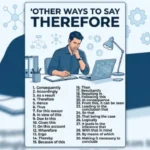
Looking for alternatives to “in conclusion” for your essay? Try these 5 top options: To summarize, Ultimately, In essence, To conclude, and All things considered. Each adds variety and professionalism to your academic writing.
Do you find yourself ending every essay with the same predictable “in conclusion”? While this phrase effectively signals the end of your writing, overusing it can make your work feel repetitive and less engaging to readers.
Learning alternatives to “in conclusion” is essential for developing sophisticated academic writing skills. By mastering different transitional phrases, you can express your final thoughts with greater variety, precision, and impact. Whether you’re crafting a research paper, a persuasive essay, or a professional report, diversifying your concluding language enhances your credibility and keeps readers interested until the very end.
“Strong conclusions leave lasting impressions. The words you choose matter.”
Quick Categories Section
Formal Alternatives to “In Conclusion”
- To summarize
- Ultimately
- In essence
- In summation
Casual Alternatives
- All in all
- At the end of the day
- To wrap it up
- In a nutshell
Professional Alternatives
- In summary
- To conclude
- On the whole
- In closing
Academic Phrases
- As demonstrated
- Based on the evidence
- Taking everything into account
- The evidence suggests
Pro Tip Box
Academic writing demands variety. Rotate between 3-4 formal alternatives rather than relying on one phrase throughout your paper.
Common Mistakes Section
1. Using Casual Phrases in Academic Essays
Mistake: Using “in a nutshell” in a research paper.
Example: “In a nutshell, climate change poses significant risks” — too informal for academic writing.
2. Overusing “In Conclusion”
Mistake: Ending every paragraph with variations of “in conclusion.”
Example: Multiple “in conclusion” uses throughout the essay — becomes repetitive and annoying.
3. Introducing New Information in the Conclusion
Mistake: Using concluding phrases to introduce new arguments.
Example: “In conclusion, we must also consider…” — conclusions should synthesize, not introduce.
4. Being Too Wordy
Mistake: Using overly complex transitional phrases.
Example: “In the final analysis of the aforementioned points” — verbose and unnecessary.
5. Forgetting the Purpose of Transitions
Mistake: Using alternatives without ensuring they fit the context.
Example: Using “ultimately” for a conclusion that isn’t about final outcomes.
What Does “In Conclusion” Mean?
Definition: “In conclusion” is a transitional phrase used to signal the final section of a piece of writing, indicating that the author is summarizing arguments and presenting final thoughts.
Grammar Explanation: This is a prepositional phrase that functions as a discourse marker. It typically appears at the start of the concluding paragraph or sentence, guiding readers that the discussion is ending.
Example Sentence: “In conclusion, the research demonstrates a clear link between exercise and mental health.”
When to Use “In Conclusion”
Common Contexts:
- Academic essays and research papers
- Business reports and proposals
- Speeches and presentations
- Opinion articles and blog posts
- Formal letters and recommendations
Spoken vs Written:
- Spoken: Used in formal presentations and speeches
- Written: Standard in academic and professional writing
Formal vs Informal:
- Formal: Widely accepted in academic writing
- Informal: Can sound stiff in casual conversations
“The best conclusions don’t just end your essay—they elevate it.”
Is It Professional or Polite to Say “In Conclusion”?
Politeness: ✔️ Yes — it’s respectful and signals the end of discussion.
Professionalism: ✔️ Yes — considered standard in formal writing.
Business Example:
- Formal: “In conclusion, we recommend implementing these strategies.”
- Alternative: “To summarize, the recommended approach is…”
Verdict: Safe to use, but variety demonstrates stronger writing skills.
Pros and Cons of Using “In Conclusion”
Pros:
- Clear and universally understood
- Standard academic transition
- Direct and unambiguous
- Suitable for formal writing
Cons:
- Overused and clichéd
- Lacks creativity
- Can sound robotic
- Signals a generic ending
“Variety in transitional phrases is the hallmark of sophisticated writing.”
Other Ways to Say “In Conclusion” (With Examples)
These alternatives will help you sound more fluent, confident, and natural in different writing situations. Use them according to tone, context, and audience to enhance your academic and professional writing.
1. Phrase: To summarize
Meaning: To provide a brief overview of key points.
Explanation: A direct and professional way to signal summation.
Example Sentence: “To summarize, the data clearly supports our initial hypothesis.”
Best Use: Research papers
Worst Use: Creative writing
Tone: Formal, concise
Context Variability: professional / academic
2. Phrase: Ultimately
Meaning: In the end; finally.
Explanation: Emphasizes the final outcome or most important point.
Example Sentence: “Ultimately, the decision rests with the committee.”
Best Use: Decisive conclusions
Worst Use: Neutral summaries
Tone: Definitive, strong
Context Variability: professional / academic / spoken
3. Phrase: In essence
Meaning: In its most basic form.
Explanation: Strips down arguments to fundamental truths.
Example Sentence: “In essence, the theory suggests that all behavior is learned.”
Best Use: Philosophical arguments
Worst Use: Data-heavy reports
Tone: Philosophical, formal
Context Variability: professional / academic
4. Phrase: In summation
Meaning: In total; considering everything.
Explanation: A slightly more formal version of “in summary.”
Example Sentence: “In summation, the project met all stated objectives.”
Best Use: Formal reports
Worst Use: Casual essays
Tone: Very formal
Context Variability: professional / academic
5. Phrase: To conclude
Meaning: To bring to an end.
Explanation: A direct alternative that maintains formality.
Example Sentence: “To conclude, we must consider the ethical implications.”
Best Use: Closing arguments
Worst Use: Informative summaries
Tone: Formal, deliberate
Context Variability: professional / academic / spoken
6. Phrase: All things considered
Meaning: Having taken everything into account.
Explanation: Suggests balanced consideration of all factors.
Example Sentence: “All things considered, the policy has been largely successful.”
Best Use: Evaluative conclusions
Worst Use: Definitive statements
Tone: Thoughtful, balanced
Context Variability: professional / academic / spoken
7. Phrase: In closing
Meaning: As I finish this discussion.
Explanation: Often used in speeches and formal presentations.
Example Sentence: “In closing, I want to thank everyone for their contributions.”
Best Use: Speeches and presentations
Worst Use: Research papers
Tone: Warm, formal
Context Variability: professional / spoken
8. Phrase: On the whole
Meaning: Considering everything.
Explanation: British English variant for summarizing outcomes.
Example Sentence: “On the whole, the experiment produced positive results.”
Best Use: Overall assessments
Worst Use: Detailed summaries
Tone: Formal, measured
Context Variability: professional / academic
9. Phrase: In summary
Meaning: A brief statement of main points.
Explanation: Standard professional transition for reports.
Example Sentence: “In summary, the recommendations are practical and cost-effective.”
Best Use: Business reports
Worst Use: Creative writing
Tone: Professional, clear
Context Variability: professional / academic
10. Phrase: As demonstrated
Meaning: As shown or proven.
Explanation: Points back to evidence presented earlier.
Example Sentence: “As demonstrated, the correlation is statistically significant.”
Best Use: Research papers
Worst Use: Opinion pieces
Tone: Academic, evidence-based
Context Variability: professional / academic
11. Phrase: Given these points
Meaning: Taking these facts into account.
Explanation: Connects conclusion directly to previous arguments.
Example Sentence: “Given these points, the original policy requires revision.”
Best Use: Analytical writing
Worst Use: Descriptive essays
Tone: Logical, formal
Context Variability: professional / academic
12. Phrase: Based on the evidence
Meaning: According to the available information.
Explanation: Grounds conclusion in presented facts.
Example Sentence: “Based on the evidence, we recommend immediate action.”
Best Use: Research conclusions
Worst Use: Thematic essays
Tone: Evidence-driven, formal
Context Variability: professional / academic
13. Phrase: Taking everything into account
Meaning: After considering all factors.
Explanation: Emphasizes comprehensive consideration.
Example Sentence: “Taking everything into account, the benefits outweigh the costs.”
Best Use: Cost-benefit analyses
Worst Use: Short essays
Tone: Thorough, formal
Context Variability: professional / academic
14. Phrase: The evidence suggests
Meaning: Based on the presented evidence.
Explanation: Academic alternative that maintains objectivity.
Example Sentence: “The evidence suggests that earlier intervention is more effective.”
Best Use: Research papers
Worst Use: Persuasive essays
Tone: Objective, academic
Context Variability: professional / academic
15. Phrase: In the final analysis
Meaning: After thorough examination.
Explanation: Emphasizes deep consideration of all aspects.
Example Sentence: “In the final analysis, the project achieved its primary goals.”
Best Use: Comprehensive reviews
Worst Use: Short articles
Tone: Thorough, formal
Context Variability: professional / academic
16. Phrase: As a final point
Meaning: Presenting the last important consideration.
Explanation: Signals one last thought before closing.
Example Sentence: “As a final point, we must acknowledge the limitations of this study.”
Best Use: Academic papers
Worst Use: Persuasive writing
Tone: Formal, measured
Context Variability: professional / academic
17. Phrase: All in all
Meaning: Considering all factors.
Explanation: Slightly informal but widely accepted.
Example Sentence: “All in all, the conference was a tremendous success.”
Best Use: Blog posts
Worst Use: Academic journals
Tone: Casual, friendly
Context Variability: casual / spoken
18. Phrase: At the end of the day
Meaning: Ultimately; when all is said and done.
Explanation: Idiomatic expression with a casual tone.
Example Sentence: “At the end of the day, customer satisfaction is what matters most.”
Best Use: Opinion pieces
Worst Use: Formal research
Tone: Conversational, casual
Context Variability: casual / spoken
19. Phrase: To wrap it up
Meaning: To bring to a conclusion.
Explanation: Casual and friendly, often used in presentations.
Example Sentence: “To wrap it up, I’d like to share three key takeaways.”
Best Use: Presentations
Worst Use: Academic writing
Tone: Friendly, casual
Context Variability: spoken
20. Phrase: In a nutshell
Meaning: In the simplest terms.
Explanation: A metaphorical way to summarize concisely.
Example Sentence: “In a nutshell, the plan aims to reduce costs by 20%.”
Best Use: Brief summaries
Worst Use: Formal documents
Tone: Informal, concise
Context Variability: casual / spoken
21. Phrase: To sum up
Meaning: To provide a brief summary.
Explanation: Direct and efficient alternative.
Example Sentence: “To sum up, both approaches have their merits.”
Best Use: Short conclusions
Worst Use: Lengthy reports
Tone: Concise, clear
Context Variability: professional / spoken
22. Phrase: In short
Meaning: Briefly stated.
Explanation: Emphasizes conciseness and clarity.
Example Sentence: “In short, the project was a resounding success.”
Best Use: Quick summaries
Worst Use: Complex arguments
Tone: Direct, concise
Context Variability: casual / professional / spoken
23. Phrase: Overall
Meaning: Considering everything.
Explanation: A simple, versatile alternative.
Example Sentence: “Overall, the results exceeded our expectations.”
Best Use: General conclusions
Worst Use: Detailed analyses
Tone: Neutral, clear
Context Variability: professional / academic / spoken
24. Phrase: As we have seen
Meaning: Based on what has been discussed.
Explanation: References earlier content in the conclusion.
Example Sentence: “As we have seen, the evidence clearly supports this conclusion.”
Best Use: Comprehensive essays
Worst Use: Short articles
Tone: Academic, reflective
Context Variability: professional / academic
25. Phrase: Taking all this into consideration
Meaning: After reviewing all relevant factors.
Explanation: Emphasizes comprehensive review.
Example Sentence: “Taking all this into consideration, we recommend proceeding.”
Best Use: Analytical reports
Worst Use: Personal essays
Tone: Thorough, formal
Context Variability: professional / academic
26. Phrase: Looking back
Meaning: Reflecting on what has been discussed.
Explanation: Adds a reflective element to the conclusion.
Example Sentence: “Looking back, the project has taught us valuable lessons.”
Best Use: Reflective essays
Worst Use: Scientific papers
Tone: Reflective, personal
Context Variability: casual / academic
27. Phrase: Consequently
Meaning: As a result.
Explanation: Emphasizes the logical outcome.
Example Sentence: “Consequently, the policy will need to be revised.”
Best Use: Cause-effect conclusions
Worst Use: General summaries
Tone: Logical, formal
Context Variability: professional / academic
28. Phrase: Accordingly
Meaning: In a way that is appropriate.
Explanation: Implies action based on evidence.
Example Sentence: “Accordingly, we have adjusted our strategy.”
Best Use: Recommendations
Worst Use: Thematic conclusions
Tone: Formal, action-oriented
Context Variability: professional / academic
29. Phrase: For these reasons
Meaning: Because of these factors.
Explanation: Connects conclusion directly to earlier arguments.
Example Sentence: “For these reasons, we believe the proposal should be approved.”
Best Use: Persuasive writing
Worst Use: Descriptive essays
Tone: Logical, persuasive
Context Variability: professional / academic / spoken
30. Phrase: Given these facts
Meaning: In light of this information.
Explanation: Grounds conclusion in presented evidence.
Example Sentence: “Given these facts, the current policy is unsustainable.”
Best Use: Evidence-based conclusions
Worst Use: Opinion pieces
Tone: Factual, formal
Context Variability: professional / academic
“Mastering transitional phrases transforms your writing from basic to brilliant.”
Mini Quiz / Self-Check
Question 1: You’re writing a research paper. Which phrase is most appropriate for your conclusion?
A) In a nutshell
B) To wrap it up
C) In summation
D) At the end of the day
Answer: C — “In summation” is appropriately formal for academic writing.
Question 2: A friend asks for a quick summary of your essay. Which phrase is most natural?
A) Based on the evidence presented
B) In essence
C) In a nutshell
D) Taking everything into account
Answer: C — “In a nutshell” is casual and appropriate for friendly conversation.
Question 3: You’re giving a business presentation. Which phrase should you use in your closing?
A) To wrap it up
B) In conclusion
C) All things considered
D) In essence
Answer: B — “In conclusion” is professional and widely accepted in business settings.
Question 4: You’re writing a persuasive essay. Which phrase strengthens your argument?
A) For these reasons
B) In a nutshell
C) To wrap it up
D) At the end of the day
Answer: A — “For these reasons” logically connects your conclusion to your argument.
“The right concluding phrase reinforces your argument and leaves a lasting impression.”
Comparison Table: Top Alternatives
| Phrase | Tone | Best Use |
|---|---|---|
| To summarize | Professional | Research papers |
| Ultimately | Definitive | Decisive conclusions |
| In essence | Philosophical | Abstract arguments |
| In summation | Very formal | Formal reports |
| To conclude | Formal | Closing arguments |
| All things considered | Balanced | Evaluative writing |
| In closing | Warm | Presentations |
| On the whole | Measured | Overall assessments |
| Given these points | Logical | Analytical writing |
| For these reasons | Persuasive | Argumentative essays |
FAQs
Q1: What is a better way to say “in conclusion” in an essay?
Better alternatives include “To summarize,” “Ultimately,” “In essence,” “In summation,” and “As demonstrated.” These phrases add variety and sophistication to academic writing.
Q2: Can I start a conclusion without using “in conclusion”?
Absolutely. You can begin your final paragraph with alternatives like “Based on the evidence,” “Given these points,” or “Taking everything into account” to signal the conclusion naturally.
Q3: Is “in conclusion” too formal for some writing?
“In conclusion” is formal and works well in academic and professional writing. However, for blog posts or casual articles, alternatives like “To sum up” or “Overall” may feel more natural.
Q4: What are some academic alternatives to “in conclusion”?
Academic alternatives include “As demonstrated,” “The evidence suggests,” “Based on the findings,” “In the final analysis,” and “Consequently” — each suitable for scholarly writing.
Q5: How can I vary my concluding phrases?
Rotate between 3-4 alternatives throughout your writing. Use “In summary” for one paper, “To conclude” for another, and “Ultimately” for a third. Varying your transitions demonstrates strong writing skills.
Conclusion
Mastering alternatives to “in conclusion” elevates your academic and professional writing, making it more varied, engaging, and sophisticated. A strong conclusion reinforces your argument and leaves a lasting impression on your readers.
Practice using these different transitional phrases in your writing. Pay attention to the tone and context of each piece, choosing the most appropriate alternative. Your readers will notice and appreciate the variety.