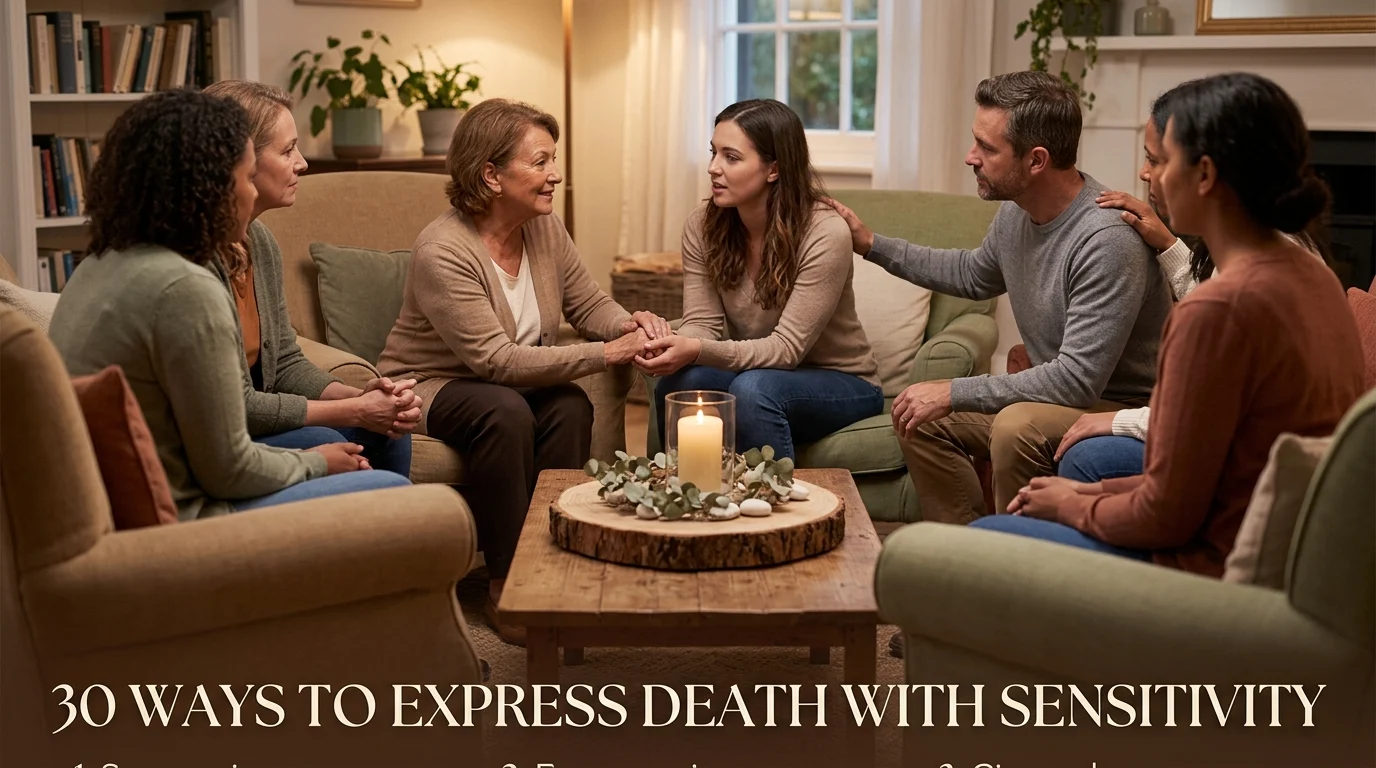
Discussing death is one of the most sensitive and challenging aspects of communication in any language. The phrase “someone died” is direct and clear, but it can sometimes feel too abrupt or clinical, especially in emotional situations. Learning alternatives to “someone died” helps you navigate these difficult conversations with greater empathy, cultural awareness, and linguistic precision.
Whether you’re writing a formal condolence message, having a sensitive conversation with a grieving friend, or communicating professionally about a loss, having a rich vocabulary of euphemisms and respectful alternatives is essential. These professional reaction phrases allow you to express sympathy in English with grace and cultural sensitivity, ensuring your words bring comfort rather than additional pain.
Quick Categories
Formal Alternatives
- Passed away
- Departed
- Deceased
- Lost their life
Professional Alternatives
- Succumbed to illness
- Passed on
- No longer with us
- Left us
Casual/Informal Expressions
- Passed
- Didn’t make it
- Gone
- Lost the battle
Religious/Spiritual Alternatives
- Gone to a better place
- Called home
- Entered eternal rest
- At peace now
Euphemistic Expressions
- Breathed their last
- Met their end
- Laid to rest
- Closed their eyes
Common Mistakes Section
1. Using slang in formal condolence messages
“Sorry your grandpa kicked the bucket.” → Better: “I’m so sorry to hear about your grandfather’s passing.”
2. Insensitive casual alternatives in professional settings
“Our CEO checked out yesterday.” → Better: “Our CEO passed away yesterday.”
3. Misusing religious alternatives
“He’s burning in hell” when the person wasn’t religious → Use neutral alternatives instead.
4. Using “lost” without context
“We lost John” can be confusing without proper context. Use “We lost John to cancer” for clarity.
5. Overly clinical language with grieving families
“The patient is deceased” → Better: “I’m very sorry, the patient has passed away.”
What Does “Someone Died” Mean?
“Someone died” is the direct, literal expression indicating that a person has ceased living. It’s the most straightforward way to communicate death in English.
Grammar: “Died” is the past tense of the verb “to die.” It functions as an intransitive verb (doesn’t take an object). Common constructions include “X died” or “X died from/of Y.”
Example Sentence: “She died peacefully in her sleep at the age of 92.”
When to Use “Someone Died”
Medical and Professional Settings:
- Official documentation
- Medical reports
- Legal proceedings
- Death certificates
Direct Communication:
- When clarity is essential
- In factual reporting
- When discussing causes of death
Spoken: Can be appropriate when directness is needed
Written: Common in formal and legal documents
Formal: Acceptable in clinical and legal contexts
Informal: May sound blunt in personal situations
Is It Professional or Polite to Say “Someone Died”?
Polite? ✔️ Yes – It’s honest and direct
Professional? ✔️ Yes – In clinical, legal, or factual contexts
Cultural Sensitivity: In many cultures, direct references to death are avoided. Consider your audience’s background when choosing alternatives.
Business Example: Instead of “Our client died,” say “Our client passed away” or “We regret to inform you that our client is no longer with us.”
Pros and Cons of Using “Someone Died”
Pros
- Clear and unambiguous communication
- Appropriate for medical and legal contexts
- Universally understood
- Removes any potential misunderstanding
Cons
- Can sound harsh in personal situations
- May seem insensitive to grieving families
- Lacks emotional warmth
- Can be culturally inappropriate in some contexts
Other Ways to Say “Someone Died” (With Examples)
These alternatives to “someone died” will help you communicate sensitively and appropriately across different situations. Use them according to context, audience, and cultural considerations.
Formal Alternatives
1. Phrase: Passed away
Meaning: Died, especially peacefully or naturally
Explanation: The most common and respectful euphemism for death
Example Sentence: “I was deeply saddened to learn that your grandmother passed away.”
Best Use: Condolence messages
Worst Use: Medical documentation
Tone: Respectful, gentle
Context Variability: Perfect for personal communication and formal condolences
2. Phrase: Departed
Meaning: Left or went away (used euphemistically for death)
Explanation: Suggests moving on to another state or place
Example Sentence: “Our beloved colleague has departed from this world.”
Best Use: Formal tributes
Worst Use: Casual conversation
Tone: Formal, poetic
Context Variability: Great for obituaries, speeches, and written tributes
3. Phrase: Deceased
Meaning: No longer living (legal/formal term)
Explanation: The standard legal and clinical term
Example Sentence: “The deceased left behind two children and a loving spouse.”
Best Use: Legal documents
Worst Use: Personal conversations
Tone: Clinical, formal
Context Variability: Essential for legal, insurance, and administrative contexts
4. Phrase: Lost their life
Meaning: Died, often in an accident or unfortunate circumstances
Explanation: Highlights tragedy rather than natural causes
Example Sentence: “Three people lost their lives in the tragic accident.”
Best Use: News reports
Worst Use: Personal condolences
Tone: Serious, respectful
Context Variability: Common in journalism and public announcements
5. Phrase: Gone to eternal rest
Meaning: Died and is now at peace
Explanation: Religious/spiritual euphemism suggesting peaceful afterlife
Example Sentence: “She has gone to her eternal rest after a long battle with illness.”
Best Use: Religious contexts
Worst Use: Non-religious settings
Tone: Spiritual, comforting
Context Variability: Works well in religious ceremonies and with believers
Professional Alternatives
6. Phrase: Passed on
Meaning: Died, moved to the next stage
Explanation: Gentle, widely accepted euphemism
Example Sentence: “I’m sorry to inform you that our colleague passed on yesterday.”
Best Use: Workplace communication
Worst Use: Medical reports
Tone: Professional, compassionate
Context Variability: Excellent for business and professional condolence
7. Phrase: No longer with us
Meaning: Died (implies they’re not physically present anymore)
Explanation: Soft, indirect way to communicate death
Example Sentence: “We regret to share that our esteemed client is no longer with us.”
Best Use: Professional announcements
Worst Use: Direct medical information
Tone: Gentle, professional
Context Variability: Perfect for internal company communications
8. Phrase: Left us
Meaning: Died, especially when referring to loved ones
Explanation: Implies emotional loss and absence
Example Sentence: “Our dear friend and mentor has left us far too soon.”
Best Use: Personal tributes
Worst Use: Official documentation
Tone: Emotional, warm
Context Variability: Works well in eulogies and memorials
9. Phrase: Succumbed to
Meaning: Died as a result of (a disease or injury)
Explanation: Specific cause-of-death language
Example Sentence: “The patient succumbed to complications from the surgery.”
Best Use: Medical contexts
Worst Use: Personal condolences
Tone: Clinical, professional
Context Variability: Essential for healthcare and research contexts
10. Phrase: Breathed their last
Meaning: Died (focuses on the final moments)
Explanation: Poetic, slightly formal expression
Example Sentence: “He breathed his last peacefully, surrounded by his family.”
Best Use: Reflective, emotional tributes
Worst Use: Casual conversations
Tone: Gentle, poetic
Context Variability: Common in literary and reflective writing
11. Phrase: Closed their eyes for the last time
Meaning: Died peacefully
Explanation: Visual, gentle euphemism
Example Sentence: “She closed her eyes for the last time with a smile on her face.”
Best Use: Emotional storytelling
Worst Use: Professional reports
Tone: Tender, emotional
Context Variability: Works well in personal reflections and eulogies
12. Phrase: Entered into rest
Meaning: Died (religious/spiritual)
Explanation: Suggests peaceful afterlife
Example Sentence: “He entered into rest on the morning of the 5th.”
Best Use: Religious contexts
Worst Use: Secular settings
Tone: Spiritual, formal
Context Variability: Common in religious obituaries
Casual/Informal Alternatives
13. Phrase: Passed
Meaning: Died (shortened version of “passed away”)
Explanation: Common, casual shortening
Example Sentence: “I just heard that Uncle Joe passed.”
Best Use: Casual conversation
Worst Use: Formal writing
Tone: Casual, familiar
Context Variability: Fine for family and close friends
14. Phrase: Didn’t make it
Meaning: Died (especially after illness or accident)
Explanation: Often used when there was hope of recovery
Example Sentence: “We rushed him to the hospital, but he didn’t make it.”
Best Use: Informal discussions
Worst Use: Formal situations
Tone: Direct, emotional
Context Variability: Common in personal accounts
15. Phrase: Gone
Meaning: Died (short and simple)
Explanation: Brief, sometimes stark way to communicate
Example Sentence: “She’s gone now, but we’ll always remember her.”
Best Use: Emotional moments
Worst Use: Professional contexts
Tone: Stark, emotional
Context Variability: Works in intimate discussions
16. Phrase: Lost the battle
Meaning: Died after fighting an illness
Explanation: Often used for cancer or other long-term diseases
Example Sentence: “He fought bravely but ultimately lost the battle to cancer.”
Best Use: Health-related conversations
Worst Use: Legal contexts
Tone: Emotional, respectful
Context Variability: Common in health discussions
Religious/Spiritual Alternatives
17. Phrase: Gone to a better place
Meaning: Died (implies afterlife is preferable)
Explanation: Comforting religious/spiritual euphemism
Example Sentence: “She was in so much pain; I believe she’s gone to a better place.”
Best Use: Comforting the bereaved
Worst Use: Non-religious contexts
Tone: Comforting, spiritual
Context Variability: Best for those with spiritual beliefs
18. Phrase: Called home
Meaning: Died (often used in Christian contexts)
Explanation: Implies God’s call to heaven
Example Sentence: “The Lord has called him home to eternal peace.”
Best Use: Christian contexts
Worst Use: Secular settings
Tone: Religious, comforting
Context Variability: Specific to Christian communities
19. Phrase: Resting in peace
Meaning: Died and is in peaceful afterlife
Explanation: Abbreviated as RIP, common expression
Example Sentence: “She’s resting in peace now, free from all suffering.”
Best Use: Memorials
Worst Use: Clinical situations
Tone: Comforting, respectful
Context Variability: Universal across many cultures
20. Phrase: At peace now
Meaning: Died after suffering or struggle
Explanation: Comforting expression for a difficult death
Example Sentence: “After months of suffering, she’s finally at peace now.”
Best Use: Comforting the bereaved
Worst Use: Official documents
Tone: Gentle, compassionate
Context Variability: Appropriate when death was difficult
21. Phrase: Returned to the earth
Meaning: Died (naturalist perspective)
Explanation: Emphasizes cycle of life and nature
Example Sentence: “He lived simply and has returned to the earth.”
Best Use: Nature-based beliefs
Worst Use: Religious contexts
Tone: Earthy, philosophical
Context Variability: Common in eco-spiritual communities
22. Phrase: Gave up the ghost
Meaning: Died (biblical or dramatic)
Explanation: Older expression with religious origins
Example Sentence: “After years of illness, he finally gave up the ghost.”
Best Use: Literary contexts
Worst Use: Casual conversation
Tone: Dramatic, old-fashioned
Context Variability: Rare in modern speech
Euphemistic Alternatives
23. Phrase: Laid to rest
Meaning: Buried, memorialized after death
Explanation: Refers to funeral and burial rites
Example Sentence: “He was laid to rest alongside his beloved wife.”
Best Use: Funeral contexts
Worst Use: Before funeral details known
Tone: Respectful, ceremonial
Context Variability: Always relates to burial or cremation
24. Phrase: Met their end
Meaning: Died (often in dramatic circumstances)
Explanation: Implying the manner or conclusion of life
Example Sentence: “The brave explorer met his end on the mountain.”
Best Use: Historical accounts
Worst Use: Personal condolences
Tone: Dramatic, formal
Context Variability: Common in storytelling
25. Phrase: Passed into the next life
Meaning: Died (implies reincarnation or afterlife)
Explanation: Suggests continuation beyond physical death
Example Sentence: “We believe she’s passed into the next life and is at peace.”
Best Use: Spiritual contexts
Worst Use: Clinical settings
Tone: Spiritual, gentle
Context Variability: Works with various belief systems
26. Phrase: Bit the dust
Meaning: Died (very informal, sometimes disrespectful)
Explanation: Slang expression, often for animals or enemies
Example Sentence: “The villain finally bit the dust in the final scene.”
Best Use: Movies or fiction
Worst Use: Real-life grief
Tone: Comic, informal
Context Variability: Only appropriate in fiction or humor
27. Phrase: Kicked the bucket
Meaning: Died (very informal/colloquial)
Explanation: Slang of uncertain origin, potentially disrespectful
Example Sentence: “He kicked the bucket last year without finishing his memoir.”
Best Use: Jokes or dark humor
Worst Use: Any situation involving real grief
Tone: Comic, informal
Context Variability: Avoid in serious contexts
28. Phrase: Cashed in their chips
Meaning: Died (gambling metaphor)
Explanation: Refers to ending a game
Example Sentence: “He lived life fully and cashed in his chips at 93.”
Best Use: Metaphorical contexts
Worst Use: Sensitive situations
Tone: Metaphorical, informal
Context Variability: Rare and potentially insensitive
29. Phrase: Crossed the rainbow bridge
Meaning: Died (specifically for pets)
Explanation: Modern euphemism for pet loss
Example Sentence: “We’ll miss you forever, sweet dog. You’ve crossed the rainbow bridge.”
Best Use: Pet loss
Worst Use: Humans
Tone: Tender, pet-specific
Context Variability: Only appropriate for pets
30. Phrase: Gone to the great [place] in the sky
Meaning: Died (often in fiction)
Explanation: Euphemism with humorous variations
Example Sentence: “The old pirate captain had gone to the great sea in the sky.”
Best Use: Fictional contexts
Worst Use: Real bereavement
Tone: Fictional, humorous
Context Variability: Only in storytelling
“The way we speak about death reveals our compassion and cultural awareness.” 💙
Mini Quiz / Self-Check
1. Which phrase is most appropriate for a formal business announcement?
- A) Kicked the bucket
- B) Passed away
- C) Gone to a better place
- D) Didn’t make it
Answer: B – “Passed away” is respectful, professional, and widely accepted.
2. You’re comforting a grieving friend who isn’t religious. Which is best?
- A) He’s with God now
- B) He has gone to a better place
- C) He passed away peacefully
- D) He gave up the ghost
Answer: C – “Passed away peacefully” is neutral, respectful, and comforting.
3. Which phrase is appropriate for a news report about an accident?
- A) Bit the dust
- B) Passed into the next life
- C) Lost their lives
- D) Kicked the bucket
Answer: C – “Lost their lives” is factual, respectful, and appropriate for journalism.
4. Your beloved pet just died. Which euphemism is most appropriate?
- A) Kicked the bucket
- B) Crossed the rainbow bridge
- C) Breathed their last
- D) Laid to rest
Answer: B – “Crossed the rainbow bridge” is specifically used and accepted for pet loss.
Comparison Table: Top 10 Alternatives
| Phrase | Tone | Best Use |
|---|---|---|
| Passed away | Respectful | General condolences |
| Lost their life | Serious | Accidents/news |
| Deceased | Clinical | Legal/medical |
| No longer with us | Gentle | Workplace announcements |
| Passed on | Professional | Business contexts |
| Succumbed to | Clinical | Medical reports |
| Resting in peace | Spiritual | Memorials |
| Gone to a better place | Comforting | Religious comfort |
| Didn’t make it | Direct | Casual/personal |
| Left us | Warm | Personal tributes |
FAQs
What is the most polite way to say someone died?
“Passed away” is the most universally accepted polite euphemism. It’s gentle, respectful, and appropriate in most personal and professional contexts.
Can I say “passed” instead of “passed away”?
Yes, “passed” is common in casual conversation, but “passed away” is more formal and often considered more respectful for written communication.
Is “kicked the bucket” offensive?
Yes, “kicked the bucket” is very informal slang and can be considered disrespectful. It should only be used in fiction, humor, or very casual dark humor contexts, never in serious conversations about death.
How do I express death in a professional email?
Use “passed away,” “passed on,” or “is no longer with us.” For example: “I am deeply saddened to announce that our colleague, [Name], passed away yesterday.”
What are the best alternatives for religious people?
“Gone to a better place,” “called home,” “entered eternal rest,” and “resting in peace” are appropriate for those with religious beliefs. Always consider the deceased’s and the bereaved’s beliefs.
Conclusion
Learning alternatives to “someone died” is essential for navigating one of life’s most sensitive experiences with grace and empathy. The vocabulary you choose in these moments can provide comfort, show respect, and demonstrate cultural awareness. From formal professional settings to intimate personal conversations, the right phrase can make a profound difference.
Remember that context, relationship, and cultural background should guide your choice. Practice using these alternatives thoughtfully, and you’ll develop the linguistic sensitivity that marks truly fluent English speakers. Being able to handle difficult conversations with compassion is not just a language skill it’s a life skill.