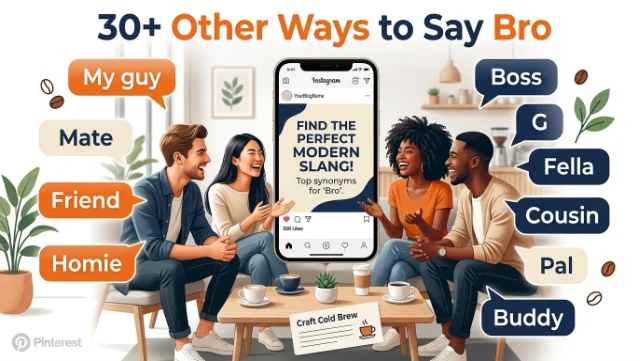
Replace repetitive “bro” with alternatives like “dude,” “man,” “friend,” “buddy,” “pal,” “mate,” “chief,” “boss,” “my guy,” and “fam” to vary your language and match different social contexts and relationships.
“Bro” is one of the most common informal terms of address in modern English, especially among younger generations. While it’s a friendly and casual way to refer to a male friend, overusing it can sound repetitive, immature, or out of place in professional settings. Knowing alternatives to “bro” helps you build stronger connections and adapt your language to different social situations.
Learning other ways to say “bro” not only expands your vocabulary but also helps you express excitement in English and navigate social interactions with greater confidence. This guide provides 30 powerful alternatives categorized by formality, relationship, and context, so you can choose the right term every time.
Quick Categories
Formal Alternatives to “Bro”
- Sir
- Mister
- Gentleman
- Colleague
- Associate
Casual Alternatives to “Bro”
- Dude
- Man
- Buddy
- Pal
- Chief
Professional Alternatives
- Friend
- Partner
- Team member
- Colleague
- Associate
Playful & Slang Alternatives
- Fam
- Homie
- Amigo
- Compadre
- Brother from another mother
Gender-Neutral Alternatives
- Friend
- Friend
- Bestie
- Comrade
- Ally
Common Mistakes Using “Bro”
- Using “bro” with strangers or elders
- ❌ “Hey bro, can you help me find this product?” (to an older store employee)
- ✅ “Excuse me, sir, could you help me find this product?”
- Using “bro” in professional emails
- ❌ “Thanks for the meeting, bro. Great ideas!”
- ✅ “Thanks for the meeting, [Name]. Great ideas!”
- Overusing “bro” in every sentence
- ❌ “Bro, that’s crazy. Bro, what are you doing? Bro, let’s go!”
- ✅ “That’s crazy! What are you doing? Let’s go!”
- Using “bro” when you don’t know the person well
- ❌ “Hey bro, nice to meet you!” (first meeting in a formal setting)
- ✅ “Nice to meet you!”
- Assuming someone is comfortable with “bro”
- ❌ “Bro, you need to chill out!” (to someone who prefers formal address)
- ✅ “Take it easy!”
What Does “Bro” Mean?
“Bro” is a casual term of address that originated as a shortened form of “brother.” It’s primarily used to address male friends, acquaintances, or even strangers in informal settings. In modern usage, it can also be used neutrally among close friends regardless of gender.
Example Sentence: “What’s up, bro? How was your weekend?”
Grammar Note: “Bro” functions as a vocative noun—a term used to address someone directly. It’s always informal and should be used with caution in professional contexts.
When to Use “Bro”
- Casual conversations with close male friends
- Social gatherings among peers
- Sports environments and athletic settings
- Gaming communities and online interactions
- Text messages with friends
- Casual social media comments and interactions
Spoken vs Written: Extremely common in spoken English and text messages; rare in formal writing.
Formal vs Informal: Very informal; avoid in professional, academic, or formal settings.
Is It Professional or Polite to Say “Bro”?
“Bro” is fundamentally informal and should be avoided in most professional contexts. While it can be friendly, it may come across as unprofessional or disrespectful.
Politeness: ✔️ Sometimes – Can be friendly among peers, but may seem dismissive or overly casual.
Professionalism: ❌ No – Never appropriate in formal business communications, presentations, or professional emails.
Business Example: Instead of “Thanks bro, that’s helpful,” try “Thank you for your help—I really appreciate it.”
Pros and Cons of Using “Bro”
Pros
- Establishes rapport – Creates instant friendliness among peers
- Builds camaraderie – Common in sports, gaming, and social groups
- Simple and natural – Easy to use in casual conversation
- Shows belonging – Signals membership in a peer group
Cons
- Too informal for work – Unprofessional in most business contexts
- Gender-exclusive – Traditionally male-focused
- Limited emotional range – Doesn’t convey nuance or sophistication
- May offend some people – Some find it overly casual or dismissive
Other Ways to Say “Bro” (With Examples)
These alternatives will help you sound more fluent, confident, and natural in different situations. Use them according to tone, context, and audience to express camaraderie, respect, or friendliness.
Classic Casual Alternatives
1. Phrase: Dude
- Meaning: A friendly term for a person (often male)
- Explanation: One of the most popular casual alternatives to “bro”
- Example Sentence: “Dude, you have to see this video—it’s hilarious!”
- Best Use: Casual conversations
- Worst Use: Professional settings
- Tone: Relaxed, friendly
- Context Variability: Casual/Spoken – extremely common
2. Phrase: Man
- Meaning: A casual term of address
- Explanation: Versatile and widely accepted
- Example Sentence: “Thanks, man. I really appreciate your help with this.”
- Best Use: Expressing gratitude
- Worst Use: Formal documents
- Tone: Friendly, appreciative
- Context Variability: Casual/Spoken – very common
3. Phrase: Buddy
- Meaning: A friendly term for a friend or acquaintance
- Explanation: Softer and more approachable than “bro”
- Example Sentence: “Hey buddy, how’s the project coming along?”
- Best Use: Friendly inquiries
- Worst Use: Formal meetings
- Tone: Warm, approachable
- Context Variability: Casual/Professional – adaptable to semi-formal situations
4. Phrase: Pal
- Meaning: A casual term for a friend or companion
- Explanation: Classic, slightly old-fashioned but charming
- Example Sentence: “Don’t worry, pal—we’ll figure this out together.”
- Best Use: Reassuring friends
- Worst Use: Professional correspondence
- Tone: Reassuring, friendly
- Context Variability: Casual – common in friendly conversation
5. Phrase: Mate
- Meaning: A friend or companion (British/Australian)
- Explanation: Very common in UK, Australian, and New Zealand English
- Example Sentence: “Alright, mate? How’s everything going?”
- Best Use: British/Australian conversations
- Worst Use: American formal settings
- Tone: Friendly, regional
- Context Variability: Casual/Spoken – common in Commonwealth English
“The words you choose to address others reveal your respect and awareness of social context.”
Friendly & Warm Alternatives
6. Phrase: Friend
- Meaning: A trusted companion or acquaintance
- Explanation: Universal and appropriate in almost any context
- Example Sentence: “Friend, I want you to know that I’m here to support you.”
- Best Use: Showing support
- Worst Use: When you don’t know the person well
- Tone: Warm, sincere
- Context Variability: Casual/Professional – versatile
7. Phrase: My guy
- Meaning: A friendly way to address a close male acquaintance
- Explanation: Modern and casual, similar to “bro”
- Example Sentence: “My guy, you killed it in that meeting!”
- Best Use: Celebrating achievements
- Worst Use: Professional settings
- Tone: Celebratory, friendly
- Context Variability: Casual – common among younger speakers
8. Phrase: Brother
- Meaning: A spiritual or close friend
- Explanation: More sincere and meaningful than “bro”
- Example Sentence: “I’ve got your back, brother. We’ll get through this.”
- Best Use: Emotional support
- Worst Use: Casual acquaintances
- Tone: Sincere, supportive
- Context Variability: Casual/Spiritual – common in communities and fraternal groups
9. Phrase: Bestie
- Meaning: A best friend
- Explanation: Very casual, usually used among close friends
- Example Sentence: “Bestie, you won’t believe what happened today!”
- Best Use: Close friendships
- Worst Use: Professional contexts
- Tone: Excited, close
- Context Variability: Casual – intimate friendship
10. Phrase: Homie
- Meaning: A close friend (originally from hip-hop culture)
- Explanation: Casual term for someone from the same neighborhood or community
- Example Sentence: “What’s good, homie? Long time no see!”
- Best Use: Casual street conversations
- Worst Use: Formal or professional settings
- Tone: Laid-back, cultural
- Context Variability: Casual – common in urban and hip-hop culture
Playful & Creative Alternatives
11. Phrase: Chief
- Meaning: A playful term of address
- Explanation: Can be used with friends or even strangers in a friendly way
- Example Sentence: “Thanks, chief. You’re a lifesaver.”
- Best Use: Casual thanks
- Worst Use: Professional contexts
- Tone: Playful, lighthearted
- Context Variability: Casual – common in friendly banter
12. Phrase: Boss
- Meaning: A playful term of respect
- Explanation: Can be sincere or ironic depending on context
- Example Sentence: “Alright, boss. I’ll get right on that.”
- Best Use: Friendly work environments
- Worst Use: With actual superiors
- Tone: Respectful, playful
- Context Variability: Professional/Casual – careful with actual managers
13. Phrase: Amigo
- Meaning: Spanish for “friend”
- Explanation: Often used in casual English conversation
- Example Sentence: “Let’s grab some lunch, amigo. My treat.”
- Best Use: Friendly invitations
- Worst Use: Formal settings
- Tone: International, friendly
- Context Variability: Casual – common in multicultural settings
14. Phrase: Compadre
- Meaning: Spanish for “godfather” but used as “close friend”
- Explanation: Warm and intimate term of address
- Example Sentence: “Compadre, I couldn’t have done it without you.”
- Best Use: Expressing deep gratitude
- Worst Use: Casual acquaintances
- Tone: Warm, intimate
- Context Variability: Casual – close friendships
15. Phrase: Brother from another mother
- Meaning: A very close friend who feels like family
- Explanation: Humorous and affectionate
- Example Sentence: “You’re my brother from another mother—I’ll always support you.”
- Best Use: Celebrating close friendships
- Worst Use: Professional settings
- Tone: Playful, affectionate
- Context Variability: Casual – extreme closeness
16. Phrase: Fam
- Meaning: Short for “family”; used for close friends or group
- Explanation: Very modern and casual
- Example Sentence: “What’s up, fam? Ready for the game?”
- Best Use: Group gatherings
- Worst Use: Professional contexts
- Tone: Inclusive, casual
- Context Variability: Casual – common in youth culture
“Variety in address shows social intelligence and emotional awareness.”
Semi-Formal & Professional Alternatives
17. Phrase: Sir
- Meaning: A respectful term of address for a man
- Explanation: Appropriate for strangers, elders, and superiors
- Example Sentence: “Sir, I appreciate your guidance on this matter.”
- Best Use: Professional respect
- Worst Use: Close friends (too formal)
- Tone: Respectful, formal
- Context Variability: Professional – essential for formal settings
18. Phrase: Mister
- Meaning: A formal term of address
- Explanation: Usually used with a surname or as a respectful address
- Example Sentence: “Thank you for your time, Mister Johnson.”
- Best Use: Professional introductions
- Worst Use: Casual conversation
- Tone: Formal, respectful
- Context Variability: Professional – with proper names
19. Phrase: Gentleman
- Meaning: A polite term for a man
- Explanation: Formal and respectful
- Example Sentence: “This way, gentlemen. Your table is ready.”
- Best Use: Formal invitations
- Worst Use: Casual situations
- Tone: Formal, polished
- Context Variability: Professional – customer service and formal events
20. Phrase: Colleague
- Meaning: A person you work with
- Explanation: Professional term for workplace relationships
- Example Sentence: “Colleague, I value your expertise on this project.”
- Best Use: Workplace communications
- Worst Use: Social settings
- Tone: Professional, respectful
- Context Variability: Professional – ideal for work emails and meetings
21. Phrase: Associate
- Meaning: A business or professional connection
- Explanation: Formal and professional
- Example Sentence: “Associates, please review the quarterly report before our meeting.”
- Best Use: Business correspondence
- Worst Use: Casual conversation
- Tone: Professional, formal
- Context Variability: Professional – common in business contexts
22. Phrase: Partner
- Meaning: A professional or life partner
- Explanation: Can be business, romantic, or collaborative
- Example Sentence: “Partner, I’m confident we can achieve our goals together.”
- Best Use: Collaborative work
- Worst Use: Casual acquaintances
- Tone: Collaborative, respectful
- Context Variability: Professional/Casual – depends on relationship
23. Phrase: Team member
- Meaning: Part of a collaborative group
- Explanation: Professional and inclusive
- Example Sentence: “Team members, let’s focus on meeting our quarterly targets.”
- Best Use: Group communications
- Worst Use: One-on-one conversations
- Tone: Collaborative, professional
- Context Variability: Professional – excellent for workplace settings
Gender-Neutral & Inclusive Alternatives
24. Phrase: Friend
- Meaning: A trusted companion
- Explanation: Gender-neutral and universally appropriate
- Example Sentence: “Friend, thank you for always being there.”
- Best Use: Showing appreciation
- Worst Use: Formal business (use name instead)
- Tone: Warm, inclusive
- Context Variability: Casual/Professional – highly versatile
25. Phrase: Folks
- Meaning: A group of people
- Explanation: Friendly and inclusive for group settings
- Example Sentence: “Alright, folks—let’s get started!”
- Best Use: Group announcements
- Worst Use: Individual conversations
- Tone: Friendly, inclusive
- Context Variability: Casual/Professional – great for informal groups
26. Phrase: Comrade
- Meaning: A companion in shared activity
- Explanation: Can be political, military, or friendly
- Example Sentence: “Comrade, we stand united in this cause.”
- Best Use: Shared purpose
- Worst Use: Casual American conversation
- Tone: Political, collaborative
- Context Variability: Professional/Historical – common in specific contexts
27. Phrase: Ally
- Meaning: A supporter or friend
- Explanation: Emphasizes shared goals and support
- Example Sentence: “Ally, I appreciate your support in this initiative.”
- Best Use: Advocacy contexts
- Worst Use: Casual conversation
- Tone: Supportive, collaborative
- Context Variability: Professional/Social – common in advocacy
28. Phrase: Pardner / Partner
- Meaning: A companion or collaborator (Western/country)
- Explanation: Friendly and slightly old-fashioned
- Example Sentence: “Howdy, pardner! Ready to ride?”
- Best Use: Playful Western contexts
- Worst Use: Professional settings
- Tone: Playful, regional
- Context Variability: Casual – niche contexts
29. Phrase: Peer
- Meaning: Someone of equal standing
- Explanation: Professional and respectful
- Example Sentence: “Peer review is essential for our academic progress.”
- Best Use: Academic contexts
- Worst Use: Casual conversation
- Tone: Professional, respectful
- Context Variability: Professional – academic and workplace
30. Phrase: Co-worker
- Meaning: A person you work with
- Explanation: Professional and inclusive
- Example Sentence: “Co-workers, I appreciate your dedication to this project.”
- Best Use: Workplace communications
- Worst Use: Social settings
- Tone: Professional, inclusive
- Context Variability: Professional – ideal for workplace
“Great communicators adapt their language to respect others while maintaining authenticity.”
Mini Quiz / Self-Check
Question 1: You’re meeting a new client for the first time. Which term should you use?
- A) Bro
- B) Sir
- C) Dude
Answer: B – “Sir” is the most respectful and appropriate term for a formal client meeting.
Question 2: You’re texting a close friend about weekend plans. Which term is most natural?
- A) Sir
- B) My guy
- C) Colleague
Answer: B – “My guy” is perfect for casual texting with close friends.
Question 3: Which alternative to “bro” is considered professional and gender-neutral?
- A) Homie
- B) Dude
- C) Colleague
Answer: C – “Colleague” is professional, appropriate for workplace settings, and gender-neutral.
Question 4: You want to address your work team casually but professionally. Which term works best?
- A) Bro
- B) Pal
- C) Team members
Answer: C – “Team members” is professional, inclusive, and appropriate for workplace communication.
Comparison Table: Top 10 Alternatives
| Phrase | Tone | Best Use |
|---|---|---|
| Sir | Formal, respectful | Professional meetings |
| Dude | Casual, friendly | Social conversations |
| Friend | Warm, inclusive | Building connections |
| My guy | Modern, casual | Close friendships |
| Colleague | Professional, neutral | Workplace communication |
| Mate | Casual, regional | UK/Australian English |
| Boss | Playful, respectful | Friendly workplaces |
| Buddy | Warm, approachable | Friendly interactions |
| Partner | Collaborative, respectful | Business partnerships |
| Homie | Laid-back, cultural | Urban/hip-hop contexts |
FAQs
1. Is it rude to say “bro” to someone you don’t know?
It can be perceived as too casual or even disrespectful if used with strangers, elders, or authority figures. In formal settings, “sir” or simply using the person’s name is more appropriate.
2. Can women be called “bro”?
Yes, in modern casual usage, “bro” has become increasingly gender-neutral among close friends and in informal settings. However, it’s best to know your audience—some women may prefer not to be called “bro.”
3. What’s the most professional way to address a male colleague?
Using their name, “Mr. [Surname],” or simply “colleague” are the most professional options. In group settings, “team members” or “associates” works well.
4. Is “bro” appropriate for use in social media?
Yes, “bro” is widely accepted on social media and in informal online interactions. Platforms like Twitter, Instagram, and TikTok frequently use casual language. However, professional platforms like LinkedIn require more formal address.
5. How do I know which alternative to “bro” to use in a specific situation?
Consider three factors: the context (professional vs. casual), your relationship with the person, and the social setting. When in doubt, choose a more neutral term like “friend” or use the person’s name.
Conclusion
Expanding your vocabulary beyond “bro” allows you to navigate social situations with greater confidence and respect. Whether you’re in a professional meeting, hanging out with friends, or meeting someone for the first time, having a diverse set of alternatives helps you communicate appropriately and build stronger relationships.
Start by practicing just a few alternatives that feel natural to you. Pay attention to how others address you and observe social cues. With consistent practice, you’ll find yourself choosing the right term for every situation building respect, connection, and authenticity in all your interactions.