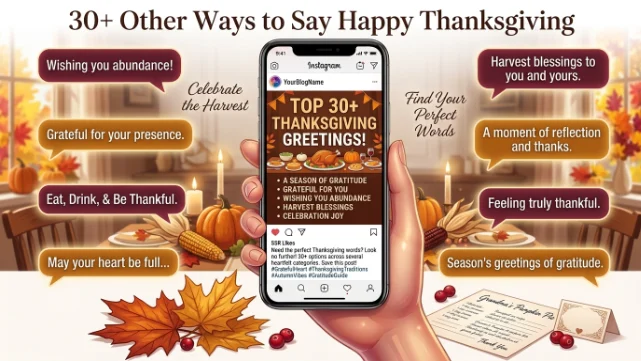
Replace the standard “Happy Thanksgiving” with warmer, more personal messages like “Wishing you a harvest of blessings,” “May your day be filled with gratitude,” “Grateful for you this season,” and “Wishing you abundance and joy” to express more meaningful holiday wishes.
“Happy Thanksgiving” is the standard greeting we all know and use, but sometimes it can feel a bit predictable or impersonal. Whether you’re writing a heartfelt card, sending a professional email, or posting on social media, knowing alternatives to “Happy Thanksgiving” helps you express genuine appreciation and warmth.
Learning other ways to say “Happy Thanksgiving” not only enriches your holiday vocabulary but also helps you express gratitude in English more authentically. This guide provides 30 powerful alternatives categorized by tone and context, so you can choose the perfect Thanksgiving message every time.
Quick Categories
Formal Alternatives to “Happy Thanksgiving”
- Wishing you a bountiful Thanksgiving
- May your Thanksgiving be filled with warmth
- Sending you my sincerest holiday wishes
- Wishing you a harvest of blessings
- May this season bring you abundant joy
Casual Alternatives to “Happy Thanksgiving”
- Happy Turkey Day!
- Hope you have a wonderful Thanksgiving
- Enjoy the feast!
- Have a great Thanksgiving with your family
- Hope your Thanksgiving is amazing
Professional Alternatives to “Happy Thanksgiving”
- Wishing you a restful holiday
- May you enjoy quality time with loved ones
- Sending warm wishes for a peaceful Thanksgiving
- Wishing you a well-deserved holiday break
- May your Thanksgiving be filled with gratitude and joy
Alternative Ways to Express Gratitude
- So grateful for you
- Thankful for your kindness
- Counting my blessings because of you
- Forever grateful for our friendship
- You’re one of the things I’m most thankful for
Common Mistakes Using “Happy Thanksgiving”
- Forgetting to personalize the greeting
- ❌ “Happy Thanksgiving” (generic)
- ✅ “Wishing you and your family a beautiful Thanksgiving” (personalized)
- Using overly informal language in professional contexts
- ❌ “Happy Turkey Day, boss!”
- ✅ “Wishing you a restful Thanksgiving holiday”
- Not acknowledging the cultural significance
- ❌ “Enjoy the food!” (reduces the meaning)
- ✅ “May your day be filled with gratitude and togetherness”
- Sending generic messages without thought
- ❌ Copy-pasted “Happy Thanksgiving” text
- ✅ “Thinking of you and grateful for our friendship this season”
- Using religious language when unsure of the recipient’s beliefs
- ❌ “God bless you this Thanksgiving”
- ✅ “Wishing you peace and joy this holiday”
What Does “Happy Thanksgiving” Mean?
“Happy Thanksgiving” is a greeting exchanged to express good wishes on Thanksgiving Day, a national holiday celebrated primarily in the United States and Canada. It conveys hope that the recipient experiences joy, gratitude, and togetherness during the holiday.
Example Sentence: “Happy Thanksgiving to you and your family—may your day be filled with love and laughter.”
Cultural Note: Thanksgiving is traditionally a time for expressing gratitude, sharing meals with family and friends, and reflecting on blessings received throughout the year.
When to Use “Happy Thanksgiving”
- In-person greetings at holiday gatherings
- Holiday cards and written correspondence
- Social media posts on Thanksgiving Day
- Professional emails to colleagues and clients
- Text messages to friends and family
- Workplace announcements about holiday schedules
Spoken vs Written: Commonly used in both, though written messages often allow for more elaborate alternatives.
Formal vs Informal: Acceptable in all contexts, but formal settings may require more sophisticated variations.
Is It Professional or Polite to Say “Happy Thanksgiving”?
While “Happy Thanksgiving” is polite and widely accepted, using more thoughtful alternatives in professional contexts can enhance your relationships and demonstrate genuine care.
Politeness: ✔️ Yes – “Happy Thanksgiving” is universally polite and appropriate.
Professionalism: ✔️ Yes, but variations are better – While professional, using the same greeting as everyone else can seem impersonal. Thoughtful alternatives show you’ve put effort into your message.
Business Example: Instead of “Happy Thanksgiving,” try “Wishing you a peaceful Thanksgiving and a well-deserved holiday break with your loved ones.”
Pros and Cons of Using “Happy Thanksgiving”
Pros
- Universally understood – Everyone knows exactly what you mean
- Simple and direct – No confusion about your intention
- Polite and safe – Appropriate for all relationships
- Time-tested – Traditional and familiar
Cons
- Overused – Can feel generic and impersonal
- Lacks emotional depth – Doesn’t convey genuine gratitude
- Missing personal touch – Forgettable in a sea of similar messages
- Doesn’t differentiate – Your message won’t stand out
Other Ways to Say “Happy Thanksgiving” (With Examples)
These alternatives will help you express gratitude and holiday wishes more authentically, whether you’re writing a card, sending a text, or speaking in person. Use them according to tone, context, and your relationship with the recipient.
Formal & Professional Alternatives
1. Phrase: Wishing you a bountiful Thanksgiving
- Meaning: Hoping the recipient has an abundant and prosperous holiday
- Explanation: “Bountiful” suggests generosity and plenty
- Example Sentence: “Wishing you a bountiful Thanksgiving filled with warmth and togetherness.”
- Best Use: Formal cards
- Worst Use: Casual texts
- Tone: Warm, elegant
- Context Variability: Professional/Written – perfect for business correspondence
2. Phrase: May your Thanksgiving be filled with warmth
- Meaning: Hoping the recipient experiences comfort and happiness
- Explanation: Focuses on emotional rather than material blessings
- Example Sentence: “May your Thanksgiving be filled with warmth, laughter, and cherished memories.”
- Best Use: Holiday cards
- Worst Use: Quick messages
- Tone: Warm, sincere
- Context Variability: Formal/Professional – excellent for clients and colleagues
3. Phrase: Sending you my sincerest holiday wishes
- Meaning: Expressing genuine good wishes for the season
- Explanation: Professional and heartfelt without being overly personal
- Example Sentence: “Sending you my sincerest holiday wishes this Thanksgiving season.”
- Best Use: Professional emails
- Worst Use: Family conversations
- Tone: Professional, respectful
- Context Variability: Professional – ideal for business relationships
4. Phrase: Wishing you a harvest of blessings
- Meaning: Hoping for many good things in the recipient’s life
- Explanation: Metaphor connecting to Thanksgiving’s agricultural origins
- Example Sentence: “Wishing you a harvest of blessings this Thanksgiving and always.”
- Best Use: Formal greetings
- Worst Use: Casual texts
- Tone: Poetic, formal
- Context Variability: Formal/Written – beautiful for cards and letters
5. Phrase: May this season bring you abundant joy
- Meaning: Hoping for plenty of happiness during the holiday
- Explanation: Elegant and uplifting
- Example Sentence: “May this season bring you abundant joy and cherished moments with loved ones.”
- Best Use: Formal messages
- Worst Use: Brief encounters
- Tone: Uplifting, gracious
- Context Variability: Formal/Professional – excellent for client communications
6. Phrase: Wishing you a peaceful Thanksgiving
- Meaning: Hoping for calm and tranquility during the holiday
- Explanation: Thoughtful alternative that acknowledges stress reduction
- Example Sentence: “Wishing you a peaceful Thanksgiving and a relaxing holiday weekend.”
- Best Use: Professional contacts
- Worst Use: Active celebrations
- Tone: Calm, considerate
- Context Variability: Professional – great for colleagues
7. Phrase: May you enjoy quality time with loved ones
- Meaning: Emphasizing the importance of family and connection
- Explanation: Focuses on relationships rather than food or festivities
- Example Sentence: “May you enjoy quality time with loved ones this Thanksgiving.”
- Best Use: Heartfelt messages
- Worst Use: Quick greetings
- Tone: Caring, thoughtful
- Context Variability: Professional/Formal – works across contexts
8. Phrase: Sending warm wishes for a meaningful Thanksgiving
- Meaning: Hoping for a holiday with depth and significance
- Explanation: Focuses on the thoughtful aspect of the day
- Example Sentence: “Sending warm wishes for a meaningful Thanksgiving celebration.”
- Best Use: Thoughtful cards
- Worst Use: Casual interactions
- Tone: Warm, reflective
- Context Variability: Formal/Professional – suitable for all formal occasions
9. Phrase: Wishing you a holiday filled with gratitude
- Meaning: Emphasizing the reflective nature of the day
- Explanation: Reminds us of the true meaning of Thanksgiving
- Example Sentence: “Wishing you a holiday filled with gratitude, generosity, and good food.”
- Best Use: Inspirational messages
- Worst Use: Quick greetings
- Tone: Inspiring, thoughtful
- Context Variability: Professional/Written – excellent for newsletters
10. Phrase: May this Thanksgiving be your best yet
- Meaning: Hoping for an exceptional holiday experience
- Explanation: Encouraging and optimistic
- Example Sentence: “May this Thanksgiving be your best yet—filled with everything that matters most.”
- Best Use: Encouraging messages
- Worst Use: Formal business
- Tone: Optimistic, warm
- Context Variability: Casual/Professional – adaptable
“The most meaningful Thanksgiving messages speak less about food and more about gratitude.”
Casual & Warm Alternatives
11. Phrase: Happy Turkey Day!
- Meaning: Informal, fun greeting referencing the traditional meal
- Explanation: Playful and casual alternative
- Example Sentence: “Happy Turkey Day! Can’t wait to see everyone at dinner!”
- Best Use: Friends and family
- Worst Use: Professional contacts
- Tone: Fun, playful
- Context Variability: Casual – perfect for close relationships
12. Phrase: Hope you have a wonderful Thanksgiving
- Meaning: Warm, simple expression of good wishes
- Explanation: Sincere and straightforward
- Example Sentence: “Hope you have a wonderful Thanksgiving with your beautiful family!”
- Best Use: Casual greetings
- Worst Use: Formal writing
- Tone: Warm, friendly
- Context Variability: Casual/Professional – versatile
13. Phrase: Enjoy the feast!
- Meaning: Wishing enjoyment of the Thanksgiving meal
- Explanation: Focuses on the food aspect of the celebration
- Example Sentence: “Enjoy the feast! Hope you get seconds of everything!”
- Best Use: Friends
- Worst Use: Formal occasions
- Tone: Lighthearted, fun
- Context Variability: Casual – great for food lovers
14. Phrase: Have a great Thanksgiving with your family
- Meaning: Personalized wish including family
- Explanation: Acknowledges the importance of family gatherings
- Example Sentence: “Have a great Thanksgiving with your family—can’t wait to hear all about it!”
- Best Use: Friends and extended family
- Worst Use: Professional emails
- Tone: Warm, personal
- Context Variability: Casual – excellent for personal connections
15. Phrase: Hope your Thanksgiving is amazing
- Meaning: Enthusiastic expression of good wishes
- Explanation: Energetic and positive
- Example Sentence: “Hope your Thanksgiving is amazing! You deserve a wonderful holiday.”
- Best Use: Friends
- Worst Use: Professional contexts
- Tone: Enthusiastic, encouraging
- Context Variability: Casual – perfect for close relationships
16. Phrase: Wishing you a day full of love and laughter
- Meaning: Hoping for joy and warmth during the holiday
- Explanation: Focuses on emotional connection and happiness
- Example Sentence: “Wishing you a day full of love and laughter this Thanksgiving.”
- Best Use: Heartfelt messages
- Worst Use: Professional contexts
- Tone: Heartfelt, warm
- Context Variability: Casual/Personal – beautiful for family messages
17. Phrase: Have a blessed Thanksgiving
- Meaning: Religious or spiritual alternative
- Explanation: Acknowledges spiritual dimension of gratitude
- Example Sentence: “Have a blessed Thanksgiving with your family and friends.”
- Best Use: Religious contexts
- Worst Use: Secular workplaces
- Tone: Spiritual, warm
- Context Variability: Personal/Religious – important to know your audience
18. Phrase: Wishing you a cozy Thanksgiving
- Meaning: Hoping for warmth, comfort, and intimacy
- Explanation: Focuses on the feeling of being surrounded by loved ones
- Example Sentence: “Wishing you a cozy Thanksgiving at home with those who matter most.”
- Best Use: Warm greetings
- Worst Use: Business communications
- Tone: Cozy, intimate
- Context Variability: Casual/Personal – perfect for close connections
19. Phrase: Hope your day is filled with joy
- Meaning: Direct expression of wishing happiness
- Explanation: Simple and sincere
- Example Sentence: “Hope your day is filled with joy, delicious food, and great company.”
- Best Use: Casual greetings
- Worst Use: Formal writing
- Tone: Joyful, sincere
- Context Variability: Casual/Professional – versatile
20. Phrase: Have a delicious Thanksgiving!
- Meaning: Wishing enjoyment of the traditional meal
- Explanation: Food-focused and friendly
- Example Sentence: “Have a delicious Thanksgiving—save some pie for me!”
- Best Use: Friends and food lovers
- Worst Use: Professional contexts
- Tone: Fun, appetizing
- Context Variability: Casual – great for fellow food enthusiasts
“A personalized Thanksgiving greeting can make someone feel truly seen and appreciated.”
Gratitude-Focused Alternatives
21. Phrase: Grateful for you this season
- Meaning: Expressing personal appreciation
- Explanation: Directly acknowledges the recipient’s importance
- Example Sentence: “Grateful for you this season and always—you’re such a blessing.”
- Best Use: Heartfelt messages
- Worst Use: Group greetings
- Tone: Heartfelt, personal
- Context Variability: Personal – perfect for close relationships
22. Phrase: Thankful for your kindness
- Meaning: Expressing specific appreciation
- Explanation: Personalizes the gratitude
- Example Sentence: “Thankful for your kindness this Thanksgiving. You make the world better.”
- Best Use: Appreciation messages
- Worst Use: Large groups
- Tone: Appreciative, warm
- Context Variability: Personal/Professional – excellent for colleagues
23. Phrase: Counting my blessings because of you
- Meaning: Acknowledging the recipient as a blessing
- Explanation: Highly personal and emotional
- Example Sentence: “Counting my blessings this Thanksgiving, and you’re at the top of my list.”
- Best Use: Deeply personal messages
- Worst Use: Casual acquaintances
- Tone: Emotional, grateful
- Context Variability: Personal – best for meaningful relationships
24. Phrase: Forever grateful for our friendship
- Meaning: Expressing long-term appreciation for a relationship
- Explanation: Emphasizes the enduring nature of connection
- Example Sentence: “Forever grateful for our friendship—hope you have a wonderful Thanksgiving.”
- Best Use: Friends
- Worst Use: Professional contacts
- Tone: Warm, loyal
- Context Variability: Personal – ideal for friends and family
25. Phrase: You’re one of the things I’m most thankful for
- Meaning: Strong personal expression of appreciation
- Explanation: Makes the recipient feel highly valued
- Example Sentence: “You’re one of the things I’m most thankful for this year. Happy Thanksgiving!”
- Best Use: Significant relationships
- Worst Use: New acquaintances
- Tone: Profound, loving
- Context Variability: Personal – for those closest to you
26. Phrase: I’m so thankful to have you in my life
- Meaning: Expressing gratitude for the relationship
- Explanation: Direct and heartfelt
- Example Sentence: “I’m so thankful to have you in my life. Wishing you the happiest Thanksgiving.”
- Best Use: Close relationships
- Worst Use: Professional contexts
- Tone: Sincere, grateful
- Context Variability: Personal – perfect for meaningful connections
27. Phrase: Wishing you abundance this Thanksgiving
- Meaning: Hoping for plenty in all areas of life
- Explanation: Focuses on prosperity and blessings
- Example Sentence: “Wishing you abundance this Thanksgiving—in love, joy, and everything that matters.”
- Best Use: Uplifting messages
- Worst Use: Quick greetings
- Tone: Generous, optimistic
- Context Variability: Formal/Casual – adaptable
28. Phrase: May your heart be full of gratitude
- Meaning: Hoping for a deep sense of thankfulness
- Explanation: Focuses on internal rather than external blessings
- Example Sentence: “May your heart be full of gratitude and your home full of love this Thanksgiving.”
- Best Use: Reflective messages
- Worst Use: Casual interactions
- Tone: Thoughtful, reflective
- Context Variability: Formal/Personal – beautiful for cards
29. Phrase: Today we give thanks for people like you
- Meaning: Expressing appreciation for the recipient specifically
- Explanation: Personal and meaningful
- Example Sentence: “Today we give thanks for people like you—grateful you’re in our lives.”
- Best Use: Group messages
- Worst Use: One-on-one conversations
- Tone: Collective, grateful
- Context Variability: Personal – excellent for family and friend groups
30. Phrase: Sending love and gratitude your way
- Meaning: Combining warmth with thankfulness
- Explanation: Simple yet meaningful expression
- Example Sentence: “Sending love and gratitude your way this Thanksgiving holiday.”
- Best Use: General greetings
- Worst Use: Formal business
- Tone: Loving, warm
- Context Variability: Casual/Personal – versatile and heartfelt
“Thanksgiving is less about the feast and more about the people who make our lives meaningful.”
Mini Quiz / Self-Check
Question 1: You’re sending a Thanksgiving email to all your clients. Which phrase is most appropriate?
- A) Happy Turkey Day!
- B) Wishing you a peaceful Thanksgiving and a restful holiday
- C) Enjoy the feast!
Answer: B – The professional and thoughtful alternative is most suitable for client communications.
Question 2: You’re posting on social media to thank your followers. Which message works best?
- A) Forever grateful for our friendship (too personal for followers)
- B) Grateful for this amazing community—Happy Thanksgiving!
- C) May your heart be full of gratitude (too formal for social media)
Answer: B – This strikes the right balance of gratitude and accessibility for a social media audience.
Question 3: Which of these is NOT a professional way to replace “Happy Thanksgiving”?
- A) Wishing you a bountiful Thanksgiving
- B) Happy Turkey Day!
- C) May this season bring you abundant joy
Answer: B – “Happy Turkey Day!” is too casual and playful for professional settings.
Question 4: You want to send a deeply personal message to your best friend. Which phrase works best?
- A) Grateful for you this season
- B) Wishing you a restful holiday
- C) Sending you my sincerest holiday wishes
Answer: A – This phrase is personal, heartfelt, and perfectly suited for a close friend.
Comparison Table: Top 10 Alternatives
| Phrase | Tone | Best Use |
|---|---|---|
| Wishing you a bountiful Thanksgiving | Formal, elegant | Business cards and formal messages |
| May your Thanksgiving be filled with warmth | Warm, sincere | Holiday cards and emails |
| Grateful for you this season | Heartfelt, personal | Close friends and family |
| Have a blessed Thanksgiving | Spiritual, warm | Religious contexts and family |
| Happy Turkey Day! | Fun, playful | Friends and informal gatherings |
| Wishing you a peaceful Thanksgiving | Calm, considerate | Professional contacts and colleagues |
| May your heart be full of gratitude | Reflective, thoughtful | Meaningful cards and messages |
| Sending love and gratitude your way | Warm, loving | General greetings and social media |
| Enjoy the feast! | Lighthearted, fun | Food lovers and casual friends |
| Thankful for your kindness | Appreciative, specific | Colleagues and acquaintances |
FAQs
1. Why should I use alternatives to “Happy Thanksgiving”?
Using alternatives to “Happy Thanksgiving” helps you express gratitude more authentically and personally. Thoughtful variations show you’ve put effort into your message, making recipients feel more valued and appreciated.
2. What’s the most professional way to say “Happy Thanksgiving”?
The most professional alternatives include “Wishing you a peaceful Thanksgiving,” “Sending warm wishes for a meaningful Thanksgiving,” and “May you enjoy quality time with loved ones.” These phrases are appropriate for clients, colleagues, and business relationships.
3. Can I use these alternatives in spoken conversations?
Absolutely! Many alternatives work beautifully in spoken English. Phrases like “Grateful for you,” “Hope you have a wonderful Thanksgiving,” and “Enjoy the feast” sound natural and sincere in conversation.
4. Is it acceptable to say “Happy Thanksgiving” in a professional email?
Yes, “Happy Thanksgiving” is perfectly acceptable in professional emails. However, adding a more personal touch—such as “Wishing you and your family a wonderful Thanksgiving”—shows more thought and consideration.
5. How can I make my Thanksgiving greeting more personal?
Personalize your message by mentioning something specific about the recipient, such as “I hope you enjoy the special time with your grandchildren” or “Thankful to have worked with you this year.” Using the recipient’s name and referencing shared experiences makes any greeting more personal.
Conclusion
Expressing gratitude is what Thanksgiving is all about, and the words we choose matter. Whether you’re writing a formal business message, sending a heartfelt card to family, or posting a quick social media update, having a variety of Thanksgiving greetings at your disposal allows you to match your message to the moment.
Try incorporating a few of these alternatives into your Thanksgiving communications this year. Start with phrases that feel comfortable, and gradually expand your repertoire. Remember, the most meaningful messages are those that come from the heart—these alternatives simply give you more ways to express what you truly feel.