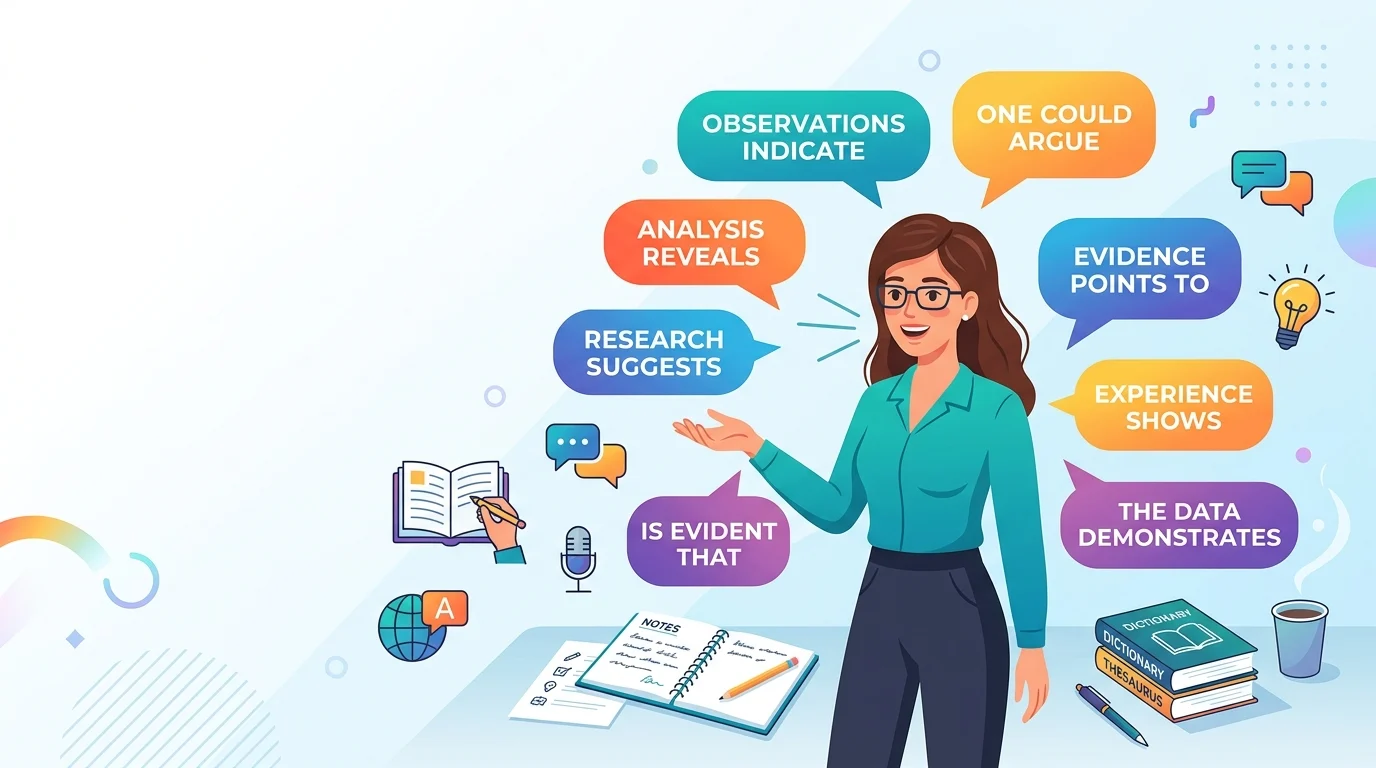
Replace repetitive “I” statements with phrases like “This writer believes,” “In my experience,” “From my perspective,” “As I see it,” and “It appears to me” to sound more professional and varied in your English communication.
The word “I” is one of the most common words in English, but overusing it can make your speech and writing sound repetitive, self-centered, or unpolished. Whether you’re writing a professional email, giving a presentation, or engaging in casual conversation, knowing alternatives to “I” helps you sound more fluent and sophisticated.
Learning other ways to say “I” not only improves your vocabulary but also helps you express excitement in English and convey your thoughts with greater precision. This guide provides 30 powerful alternatives categorized by formality and context, so you can choose the right phrase every time.
Quick Categories
Formal Alternatives to “I”
- This writer / This author
- The undersigned
- One might say
- It is my contention that
- From my vantage point
Casual Alternatives to “I”
- I guess
- I figure
- In my book
- The way I see it
- If you ask me
Professional Alternatives to “I”
- In my professional opinion
- Based on my analysis
- From my perspective
- As I understand it
- My assessment is
Informal Expressions
- I reckon
- If you ask me
- I’d say
- In my humble opinion (IMHO)
- For my money
Common Mistakes Using “I”
- Starting every sentence with “I”
- ❌ “I think the project is good. I believe we should proceed. I feel confident.”
- ✅ “The project shows promise. We should proceed, and I feel confident about the outcome.”
- Using “I” in formal academic writing too frequently
- ❌ “I conducted the experiment and I observed the results.”
- ✅ “The experiment was conducted, and the results were observed.”
- Overusing “I think” as a filler phrase
- ❌ “I think we should go. I think it’s a good idea.”
- ✅ “We should go. It seems like a good idea.”
- Using “I” when the focus should be on the listener
- ❌ “I want to help you with your problem.”
- ✅ “Let’s focus on finding a solution to your problem.”
- Using “I” in passive voice incorrectly
- ❌ “I was given the report by the manager.”
- ✅ “The manager gave me the report.”
What Does “I” Mean?
“I” is the first-person singular pronoun used to refer to oneself as the subject of a verb. It is always capitalized in English, regardless of its position in a sentence.
Example Sentence: “I will attend the meeting tomorrow at 10 AM.”
Grammar Note: “I” functions as a subject pronoun and should not be confused with “me,” which is used as an object pronoun.
When to Use “I”
- Casual conversations with friends and family
- Expressing personal opinions in informal settings
- Professional emails when taking ownership of ideas
- Job interviews to showcase personal achievements
- Presentations when sharing personal experiences
- Academic writing (sparingly) to state your position
Spoken vs Written: More common in spoken English; written English often requires more varied phrasing.
Formal vs Informal: Acceptable in both, but formal contexts demand more sophisticated alternatives.
Is It Professional or Polite to Say “I”?
While “I” is perfectly acceptable, using it too frequently can make you sound self-absorbed or unprofessional in business contexts.
Politeness: ✔️ Yes – Using “I” is polite in most situations.
Professionalism: ❌ Not ideal – In formal writing and presentations, overusing “I” can undermine your credibility.
Business Example: Instead of “I think we should implement this strategy,” try “The data suggests implementing this strategy would be beneficial.”
Pros and Cons of Using “I”
Pros
- Simple and natural – Easy to use in everyday conversation
- Friendly tone – Creates a personal connection with the listener
- Common usage – Universally understood across all English dialects
- Easy to understand – Straightforward and unambiguous
Cons
- Too informal for work – Can sound unprofessional in corporate settings
- Overused – Becomes repetitive and boring
- Limited emotional range – Doesn’t convey nuance or sophistication
- Not suitable for formal writing – Academic and professional documents often avoid excessive “I” usage
Other Ways to Say “I” (With Examples)
These alternatives will help you sound more fluent, confident, and natural in different situations. Use them according to tone, context, and audience to express excitement, admiration, or approval.
Formal & Professional Alternatives
1. Phrase: This writer believes
- Meaning: A formal way to state your opinion
- Explanation: Often used in academic or professional writing
- Example Sentence: “This writer believes that renewable energy is the future of sustainable development.”
- Best Use: Academic essays
- Worst Use: Casual conversation
- Tone: Formal, academic
- Context Variability: Professional – common in research papers and formal reports
2. Phrase: In my professional opinion
- Meaning: Stating a viewpoint based on expertise
- Explanation: Signals authority and confidence
- Example Sentence: “In my professional opinion, this marketing strategy will increase engagement by 30%.”
- Best Use: Business meetings
- Worst Use: Personal conversations
- Tone: Confident, authoritative
- Context Variability: Professional – excellent for presentations and client communications
3. Phrase: From my perspective
- Meaning: Sharing your personal viewpoint
- Explanation: Acknowledges that others may see things differently
- Example Sentence: “From my perspective, the proposal needs more detailed financial projections.”
- Best Use: Collaborative discussions
- Worst Use: When stating universal facts
- Tone: Open, diplomatic
- Context Variability: Professional/Spoken – works well in meetings and emails
4. Phrase: Based on my analysis
- Meaning: Drawing conclusions from your research
- Explanation: Shows you’ve done your homework
- Example Sentence: “Based on my analysis, we should pivot our approach to target younger demographics.”
- Best Use: Data-driven decisions
- Worst Use: Casual conversation
- Tone: Analytical, precise
- Context Variability: Professional – ideal for reports and strategy sessions
5. Phrase: As I understand it
- Meaning: Expressing your comprehension of a situation
- Explanation: Leaves room for correction or clarification
- Example Sentence: “As I understand it, the deadline has been moved to next Friday.”
- Best Use: Clarifying information
- Worst Use: When you’re certain of facts
- Tone: Humble, collaborative
- Context Variability: Professional/Spoken – perfect for emails and meetings
6. Phrase: My assessment is
- Meaning: Your evaluation of a situation
- Explanation: Implies thoughtful consideration
- Example Sentence: “My assessment is that we need additional resources to complete this project on time.”
- Best Use: Performance reviews
- Worst Use: Informal chats
- Tone: Professional, measured
- Context Variability: Professional – suitable for formal evaluations
7. Phrase: It appears to me
- Meaning: Your observation or conclusion
- Explanation: Suggests a reasoned opinion
- Example Sentence: “It appears to me that our competitors are gaining market share.”
- Best Use: Analytical discussions
- Worst Use: Casual settings
- Tone: Reflective, diplomatic
- Context Variability: Professional/Written – common in business intelligence
8. Phrase: In my view
- Meaning: Stating your personal opinion
- Explanation: Classic formal alternative to “I think”
- Example Sentence: “In my view, diversity and inclusion should be a top priority.”
- Best Use: Formal discussions
- Worst Use: Text messages
- Tone: Formal, measured
- Context Variability: Professional – excellent for presentations
9. Phrase: I would argue that
- Meaning: Presenting a position you’re ready to defend
- Explanation: Shows you have evidence to support your claim
- Example Sentence: “I would argue that remote work increases productivity.”
- Best Use: Debates and persuasive writing
- Worst Use: Casual conversation
- Tone: Persuasive, confident
- Context Variability: Professional/Academic – great for debates
10. Phrase: The way I see it
- Meaning: Your personal interpretation
- Explanation: Casual yet professional way to share your perspective
- Example Sentence: “The way I see it, we have two viable options moving forward.”
- Best Use: Team discussions
- Worst Use: Formal writing
- Tone: Friendly, diplomatic
- Context Variability: Professional/Spoken – versatile alternative
11. Phrase: From my vantage point
- Meaning: Your unique position or perspective
- Explanation: Implies a strategic overview
- Example Sentence: “From my vantage point, the merger will create significant synergies.”
- Best Use: Executive summaries
- Worst Use: Everyday conversations
- Tone: Strategic, formal
- Context Variability: Professional – perfect for board meetings
12. Phrase: One might say
- Meaning: Generalizing an observation
- Explanation: More objective and less personal
- Example Sentence: “One might say that this technology has revolutionized our industry.”
- Best Use: Academic writing
- Worst Use: Personal conversations
- Tone: Objective, formal
- Context Variability: Written – common in essays and articles
13. Phrase: It is my contention that
- Meaning: Your central argument
- Explanation: Used in persuasive or argumentative contexts
- Example Sentence: “It is my contention that education reform must begin at the primary level.”
- Best Use: Formal arguments
- Worst Use: Casual discussions
- Tone: Forceful, intellectual
- Context Variability: Academic – ideal for theses and debates
14. Phrase: Speaking for myself
- Meaning: Clarifying that this is your personal opinion
- Explanation: Distinguishes your view from others
- Example Sentence: “Speaking for myself, I support the new policy changes.”
- Best Use: Group discussions
- Worst Use: Formal writing
- Tone: Personal, clear
- Context Variability: Professional/Spoken – great for meetings
15. Phrase: Personally speaking
- Meaning: Adding a personal dimension to your statement
- Explanation: Softens a potentially strong opinion
- Example Sentence: “Personally speaking, I’ve found that morning meetings are most productive.”
- Best Use: Sharing personal experiences
- Worst Use: Impersonal contexts
- Tone: Personal, approachable
- Context Variability: Professional/Spoken – versatile and common
“The right tone makes your English sound professional and confident.”
Casual & Informal Alternatives
16. Phrase: I guess
- Meaning: Expressing uncertainty or casual opinion
- Explanation: Indicates you’re not completely sure
- Example Sentence: “I guess we could try that approach if nothing else works.”
- Best Use: Casual suggestions
- Worst Use: Professional decisions
- Tone: Uncertain, relaxed
- Context Variability: Casual – common in everyday conversation
17. Phrase: I figure
- Meaning: Your deduction or conclusion
- Explanation: More casual than “I think”
- Example Sentence: “I figure we’ll need about two more weeks to finish the project.”
- Best Use: Informal estimates
- Worst Use: Formal presentations
- Tone: Laid-back, confident
- Context Variability: Casual/Spoken – great for colleagues
18. Phrase: In my book
- Meaning: In your personal opinion or philosophy
- Explanation: Idiomatic expression for personal standards
- Example Sentence: “In my book, honesty is the most important quality in a leader.”
- Best Use: Value judgments
- Worst Use: Formal writing
- Tone: Friendly, personal
- Context Variability: Casual – common in everyday speech
19. Phrase: If you ask me
- Meaning: Your opinion, whether asked or not
- Explanation: Gives you permission to share your view
- Example Sentence: “If you ask me, we should just cancel the meeting and send an email instead.”
- Best Use: Offering unsolicited opinions
- Worst Use: Professional environments
- Tone: Confident, direct
- Context Variability: Casual/Spoken – very common
20. Phrase: I reckon
- Meaning: To think or suppose (British/Australian)
- Explanation: Informal and conversational
- Example Sentence: “I reckon we should get started on this before it’s too late.”
- Best Use: Casual British conversation
- Worst Use: Formal American business
- Tone: Relaxed, regional
- Context Variability: Casual – popular in UK/Aussie English
21. Phrase: I’d say
- Meaning: Your opinion or approximation
- Explanation: Casual and conversational
- Example Sentence: “I’d say we have about a 70% chance of meeting the deadline.”
- Best Use: Informal estimates
- Worst Use: Professional reports
- Tone: Casual, friendly
- Context Variability: Casual/Spoken – very common
22. Phrase: For my money
- Meaning: Based on your preference or opinion
- Explanation: Idiomatic expression for personal choice
- Example Sentence: “For my money, the Italian restaurant is better than the French one.”
- Best Use: Recommendations
- Worst Use: Professional decisions
- Tone: Friendly, opinionated
- Context Variability: Casual – common in recommendations
23. Phrase: From where I stand
- Meaning: Your position or viewpoint
- Explanation: Visual metaphor for perspective
- Example Sentence: “From where I stand, the team is doing an excellent job.”
- Best Use: Team feedback
- Worst Use: Formal documents
- Tone: Personal, supportive
- Context Variability: Casual/Professional – versatile
24. Phrase: As far as I’m concerned
- Meaning: Emphasizing your personal opinion
- Explanation: Strong, personal statement
- Example Sentence: “As far as I’m concerned, we’ve done everything we can.”
- Best Use: Standing your ground
- Worst Use: Collaborative discussion
- Tone: Firm, personal
- Context Variability: Casual/Spoken – common
25. Phrase: I imagine
- Meaning: Your guess or speculation
- Explanation: Less certain than “I think”
- Example Sentence: “I imagine they’ll respond to our proposal within the week.”
- Best Use: Predictions
- Worst Use: Certain situations
- Tone: Speculative, open
- Context Variability: Casual/Professional – adaptable
“Great communicators know when to step back from ‘I’ and let their message shine.”
Professional & Collaborative Alternatives
26. Phrase: Let me share
- Meaning: Inviting attention to your contribution
- Explanation: More engaging and collaborative
- Example Sentence: “Let me share some insights from our customer surveys.”
- Best Use: Presentations
- Worst Use: Written reports
- Tone: Engaging, generous
- Context Variability: Professional/Spoken – great for team meetings
27. Phrase: It seems to me
- Meaning: Your perception of a situation
- Explanation: Diplomatic and open to discussion
- Example Sentence: “It seems to me that we should focus on quality over quantity.”
- Best Use: Collaborative decision-making
- Worst Use: Personal arguments
- Tone: Diplomatic, thoughtful
- Context Variability: Professional/Spoken – excellent for teams
28. Phrase: My impression is
- Meaning: Your initial understanding
- Explanation: Tentative and open to feedback
- Example Sentence: “My impression is that the client wants a more creative approach.”
- Best Use: Client interactions
- Worst Use: Certain statements
- Tone: Observant, careful
- Context Variability: Professional – great for client management
29. Phrase: To be honest
- Meaning: Adding sincerity to your statement
- Explanation: Prepares listener for frank opinion
- Example Sentence: “To be honest, I think we need to reconsider our approach.”
- Best Use: Honest feedback
- Worst Use: Casual joking
- Tone: Sincere, direct
- Context Variability: Professional/Spoken – builds trust
30. Phrase: I’d like to point out
- Meaning: Drawing attention to something important
- Explanation: Professional and respectful
- Example Sentence: “I’d like to point out that our timeline is quite aggressive.”
- Best Use: Flagging important details
- Worst Use: Criticism
- Tone: Professional, respectful
- Context Variability: Professional – excellent for meetings
“Expanding your vocabulary isn’t about sounding smarter—it’s about communicating more effectively.”
Mini Quiz / Self-Check
Question 1: You’re writing a formal business email to a client. Which phrase is most appropriate?
- A) I guess
- B) In my professional opinion
- C) I reckon
Answer: B – “In my professional opinion” is the most appropriate choice for formal client communication.
Question 2: You’re in a casual conversation with a friend. Which alternative sounds natural?
- A) It is my contention that
- B) From my vantage point
- C) I figure
Answer: C – “I figure” is perfect for casual conversation with friends.
Question 3: Which of these is NOT a professional way to replace “I”?
- A) Based on my analysis
- B) In my book
- C) As I understand it
Answer: B – “In my book” is a casual idiom, not suitable for professional contexts.
Question 4: You want to be diplomatic and leave room for other opinions. Which phrase works best?
- A) I’m certain
- B) It seems to me
- C) For my money
Answer: B – “It seems to me” is diplomatic and open to discussion.
Comparison Table: Top 10 Alternatives
| Phrase | Tone | Best Use |
|---|---|---|
| In my professional opinion | Formal, authoritative | Business presentations |
| From my perspective | Professional, diplomatic | Collaborative discussions |
| Based on my analysis | Analytical, precise | Data-driven decisions |
| As I understand it | Humble, open | Clarifying information |
| The way I see it | Friendly, diplomatic | Team meetings |
| I reckon | Relaxed, regional | Casual UK/Aussie conversation |
| In my book | Personal, friendly | Value judgments |
| If you ask me | Confident, direct | Casual opinions |
| Let me share | Engaging, collaborative | Interactive presentations |
| It seems to me | Diplomatic, thoughtful | Consensus-building |
FAQs
1. Why should I avoid using “I” in professional writing?
Using “I” too frequently in professional writing can make your communication seem self-centered and informal. Using alternatives to “I” helps you sound more objective, professional, and credible, especially in business reports and client communications.
2. Can I use these alternatives in spoken English?
Yes, absolutely! Many alternatives like “from my perspective,” “as I understand it,” and “the way I see it” sound natural in spoken English. The key is matching the phrase to the formality of the situation and your audience.
3. What’s the most professional way to say “I think”?
“In my professional opinion” or “based on my analysis” are among the most professional alternatives to “I think.” These phrases demonstrate expertise and are widely used in business and academic contexts.
4. Is “I” considered egotistical in English?
Not necessarily—using “I” is perfectly normal in English. However, overusing it can make you appear self-centered or repetitive. Learning different ways to say “I” helps you vary your language and maintain listener interest.
5. Are these alternatives to “I” accepted in academic writing?
Some alternatives are excellent for academic writing, such as “this writer believes,” “it is my contention that,” and “from my vantage point.” However, always check your academic style guide for specific recommendations on first-person usage.
Conclusion
Learning different ways to say “I” is one of the simplest yet most powerful ways to improve your English communication. Whether you’re writing a formal report, preparing for a job interview, or just having a conversation with friends, having a diverse vocabulary allows you to match your tone to any situation.
Practice using these 30 alternatives in your daily conversations and writing. Start with just a few that feel comfortable, and gradually expand your range. Remember, the goal isn’t to eliminate “I” entirely it’s to use it strategically and with intention. With consistent practice, you’ll find yourself communicating more confidently and professionally in any context.