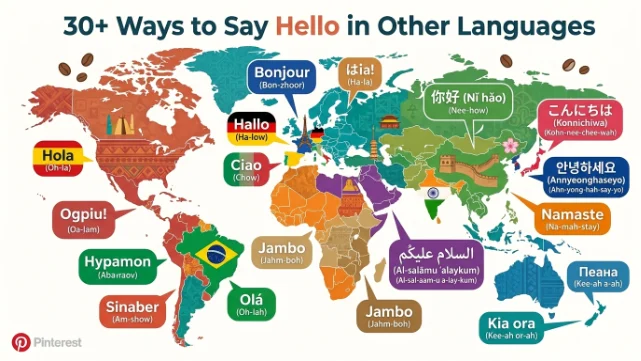
Expand your global communication with greetings like “Bonjour” (French), “Hola” (Spanish), “Ni Hao” (Chinese), “Konnichiwa” (Japanese), and “Ciao” (Italian) to connect with people from different cultures and make a positive impression worldwide.
Learning how to say “hello” in different languages is one of the simplest yet most powerful ways to connect with people from other cultures. Whether you’re traveling internationally, working with global colleagues, or simply want to impress friends from other countries, knowing other ways to say hello opens doors to meaningful connections.
Understanding alternatives to “hello” across languages not only shows respect for other cultures but also enhances your professional communication in multicultural settings. This guide provides 30 greetings from around the world, categorized by region and formality, so you can greet anyone with confidence and cultural awareness.
Quick Categories
European Greetings
- Bonjour (French)
- Hola (Spanish)
- Ciao (Italian)
- Hallo (German)
- Privet (Russian)
Asian Greetings
- Ni Hao (Chinese)
- Konnichiwa (Japanese)
- Annyeonghaseyo (Korean)
- Namaste (Hindi)
- Sawasdee (Thai)
Middle Eastern & African Greetings
- Salaam (Arabic)
- Shalom (Hebrew)
- Jambo (Swahili)
- Salam (Persian)
- Marhaba (Arabic dialect)
Casual & Informal Greetings Worldwide
- Hey (English)
- Yo (American slang)
- Cheers (British/Australian)
- G’day (Australian)
- Howdy (American Southern)
Common Mistakes When Using Foreign Greetings
- Mispronouncing greetings in other languages
- ❌ Saying “Konnichi-wa” with incorrect emphasis
- ✅ “Kon-nee-chee-wah” with proper Japanese pronunciation
- Using informal greetings in formal settings
- ❌ Using “Ciao” with a business client in Italy
- ✅ Using “Buongiorno” (formal “good day”) in business contexts
- Ignoring cultural context and gestures
- ❌ Bowing in a country where handshakes are expected
- ✅ Researching appropriate physical greetings for each culture
- Using the wrong greeting for the time of day
- ❌ Saying “Buenos días” (good morning) in the evening
- ✅ Using “Buenas noches” (good night) after dark
- Assuming all Arabic speakers use the same greeting
- ❌ Using “Salaam” in every Arabic-speaking country
- ✅ Knowing regional variations like “Marhaba” in some contexts
What Does “Hello” Mean?
“Hello” is an English greeting used to acknowledge someone’s presence, initiate conversation, or attract attention. It derives from the Old High German word “halâ,” which was used to call attention.
Example Sentence: “Hello, it’s wonderful to finally meet you in person.”
Grammar Note: “Hello” functions as an interjection and is typically followed by a comma when addressing someone directly.
When to Use “Hello”
- Meeting someone for the first time in any context
- Answering phone calls in English-speaking countries
- Starting conversations in professional and casual settings
- Entering a room or joining a group
- Greeting colleagues in the workplace
- Traveling abroad (when you don’t know the local greeting)
Spoken vs Written: More common in spoken English; written communication often uses “Dear” or “Hi” in emails.
Formal vs Informal: “Hello” is neutral—acceptable in most contexts, but formal settings might prefer “Good morning/afternoon.”
Is It Professional or Polite to Say “Hello”?
While “hello” is universally understood in English, using it in international business settings can sometimes come across as too casual or culturally unaware.
Politeness: ✔️ Yes – “Hello” is polite and friendly in most contexts.
Professionalism: ⚠️ It depends – Professional, but learning local greetings shows greater respect and cultural intelligence.
Business Example: Instead of just “Hello,” try “Bonjour, it’s a pleasure to connect with your French office” when speaking with international colleagues.
Pros and Cons of Using “Hello”
Pros
- Universally recognized – Understood by English speakers worldwide
- Simple and neutral – Appropriate for most situations
- Easy to remember – Requires no special pronunciation
- Versatile – Works in both casual and professional settings
Cons
- Lacks cultural awareness – Doesn’t show effort to connect with other cultures
- Can seem lazy – Especially when traveling or working internationally
- Limited emotional range – Doesn’t convey warmth or enthusiasm
- Not suitable for multicultural settings – Misses opportunities for connection
Other Ways to Say “Hello” in Other Languages (With Examples)
These global greetings will help you connect with people from different cultures and show your international awareness. Use them according to region, formality, and context to make a positive impression.
European Languages
1. Phrase: Bonjour
- Meaning: Good day in French
- Explanation: The standard greeting for daytime in France
- Example Sentence: “Bonjour! Would you like to see our new collection?”
- Best Use: French-speaking countries
- Worst Use: Informal evening settings (use “Bonsoir” instead)
- Tone: Formal, polite
- Context Variability: Professional/Spoken – essential for French business
2. Phrase: Hola
- Meaning: Hello in Spanish
- Explanation: The most common greeting in Spanish-speaking countries
- Example Sentence: “Hola, how can I assist you today?”
- Best Use: Spanish-speaking countries
- Worst Use: Business contexts in Spain (use “Buenos días” for formal)
- Tone: Warm, friendly
- Context Variability: Casual/Professional – versatile but informal
3. Phrase: Ciao
- Meaning: Hello/Goodbye in Italian
- Explanation: Extremely common casual greeting in Italy
- Example Sentence: “Ciao! Are you ready for the meeting?”
- Best Use: Friends and family
- Worst Use: Professional settings (use “Buongiorno”)
- Tone: Friendly, informal
- Context Variability: Casual – very common among friends
4. Phrase: Hallo
- Meaning: Hello in German
- Explanation: Standard greeting in German-speaking countries
- Example Sentence: “Hallo, I’m here for the conference.”
- Best Use: German-speaking regions
- Worst Use: Formal business (use “Guten Tag”)
- Tone: Neutral, casual
- Context Variability: Casual/Professional – versatile
5. Phrase: Privet
- Meaning: Hello in Russian
- Explanation: Informal greeting used in Russia
- Example Sentence: “Privet! Welcome to our office.”
- Best Use: Casual Russian conversations
- Worst Use: Formal contexts (use “Zdravstvuyte”)
- Tone: Casual, friendly
- Context Variability: Casual – common among friends
6. Phrase: Buongiorno
- Meaning: Good morning/day in Italian
- Explanation: Formal Italian greeting for daytime
- Example Sentence: “Buongiorno, we’re pleased to have you here.”
- Best Use: Professional Italian settings
- Worst Use: Casual evening interactions
- Tone: Professional, formal
- Context Variability: Professional – essential for Italian business
7. Phrase: Guten Tag
- Meaning: Good day in German
- Explanation: Formal German greeting for daytime
- Example Sentence: “Guten Tag, I’m calling from our headquarters.”
- Best Use: German business contexts
- Worst Use: Casual conversations with friends
- Tone: Formal, respectful
- Context Variability: Professional – standard in German offices
8. Phrase: Hej
- Meaning: Hello in Swedish/Danish
- Explanation: Simple, widely-used greeting in Scandinavia
- Example Sentence: “Hej! How was your trip to Stockholm?”
- Best Use: Nordic countries
- Worst Use: Formal ceremonies (use “God dag”)
- Tone: Friendly, relaxed
- Context Variability: Casual/Professional – very common
“A simple greeting in someone’s native language can transform a business transaction into a meaningful connection.”
Asian Languages
9. Phrase: Ni Hao
- Meaning: Hello in Chinese (Mandarin)
- Explanation: Literally means “you good” in Mandarin
- Example Sentence: “Ni Hao! Welcome to our Shanghai office.”
- Best Use: Chinese-speaking regions
- Worst Use: When you can’t pronounce tones correctly
- Tone: Neutral, respectful
- Context Variability: Professional/Casual – universally used
10. Phrase: Konnichiwa
- Meaning: Hello/Good afternoon in Japanese
- Explanation: Standard daytime greeting in Japanese
- Example Sentence: “Konnichiwa, it’s an honor to meet you.”
- Best Use: Japan and Japanese contexts
- Worst Use: Early morning (use “Ohayou gozaimasu”)
- Tone: Polite, standard
- Context Variability: Professional/Spoken – widely used
11. Phrase: Annyeonghaseyo
- Meaning: Hello in Korean
- Explanation: Standard polite greeting in Korean
- Example Sentence: “Annyeonghaseyo! Thank you for visiting our headquarters.”
- Best Use: South Korea
- Worst Use: North Korea (political sensitivity)
- Tone: Polite, formal
- Context Variability: Professional/Casual – depends on formality level
12. Phrase: Namaste
- Meaning: Hello in Hindi (with spiritual meaning)
- Explanation: Literally “I bow to you” in Sanskrit
- Example Sentence: “Namaste, it’s wonderful to connect with our Indian team.”
- Best Use: Indian subcontinent
- Worst Use: Very casual contexts (use “Hi” instead)
- Tone: Respectful, spiritual
- Context Variability: Professional/Spiritual – common in India
13. Phrase: Sawasdee
- Meaning: Hello in Thai
- Explanation: Standard Thai greeting with gender-specific endings
- Example Sentence: “Sawasdee ka/krap, welcome to Thailand!”
- Best Use: Thailand
- Worst Use: Without the proper gender ending
- Tone: Polite, friendly
- Context Variability: Professional/Casual – essential for Thailand
14. Phrase: Xin Chào
- Meaning: Hello in Vietnamese
- Explanation: Standard greeting in Vietnamese
- Example Sentence: “Xin chào! Are you enjoying your visit to Hanoi?”
- Best Use: Vietnam
- Worst Use: Very formal (use “Kính chào”)
- Tone: Neutral, respectful
- Context Variability: Casual/Professional – widely used
15. Phrase: Selamat
- Meaning: Hello in Indonesian/Malay
- Explanation: Can be combined with time of day
- Example Sentence: “Selamat pagi, good morning to our Indonesian colleagues.”
- Best Use: Indonesia and Malaysia
- Worst Use: Without time reference for clarity
- Tone: Polite, standard
- Context Variability: Professional/Casual – depends on time addition
16. Phrase: Shalom
- Meaning: Peace/Hello in Hebrew
- Explanation: Meaning “peace” in Hebrew, used as greeting
- Example Sentence: “Shalom! We’re excited to welcome you to Israel.”
- Best Use: Israel
- Worst Use: Arabic contexts (use “Salaam”)
- Tone: Spiritual, warm
- Context Variability: Professional/Casual – widely used
“Cultural intelligence begins with a simple greeting—it’s the doorway to cross-cultural understanding.”
Middle Eastern & African Languages
17. Phrase: Salaam
- Meaning: Peace in Arabic
- Explanation: Shortened from “As-salamu alaykum”
- Example Sentence: “Salaam, welcome to the Middle East.”
- Best Use: Arabic-speaking countries
- Worst Use: Not using full response “Wa alaykum salaam”
- Tone: Warm, spiritual
- Context Variability: Professional/Casual – very common
18. Phrase: As-salamu alaykum
- Meaning: Peace be upon you in Arabic
- Explanation: Full traditional Islamic greeting
- Example Sentence: “As-salamu alaykum, we appreciate your partnership.”
- Best Use: Muslim-majority countries
- Worst Use: Non-Muslim contexts (use “Marhaba” or “Hello”)
- Tone: Formal, respectful
- Context Variability: Professional/Religious – widely used
19. Phrase: Jambo
- Meaning: Hello in Swahili
- Explanation: Casual greeting in East Africa
- Example Sentence: “Jambo! Welcome to Kenya and our conservation project.”
- Best Use: East African countries
- Worst Use: Formal contexts (use “Habari” or “Shikamoo”)
- Tone: Friendly, casual
- Context Variability: Casual – common among tourists
20. Phrase: Salam
- Meaning: Peace in Persian
- Explanation: Standard greeting in Iran and Afghanistan
- Example Sentence: “Salam, thank you for visiting our facilities.”
- Best Use: Iran and Persian-speaking regions
- Worst Use: Casual Western contexts
- Tone: Respectful, warm
- Context Variability: Professional/Casual – widely used
21. Phrase: Marhaba
- Meaning: Hello/Welcome in Arabic
- Explanation: Informal greeting in many Arabic dialects
- Example Sentence: “Marhaba! You’re welcome in our country.”
- Best Use: Less formal Arabic contexts
- Worst Use: Religious contexts (use “Salaam”)
- Tone: Friendly, welcoming
- Context Variability: Casual – common in the Levant
22. Phrase: Dumela
- Meaning: Hello in Setswana
- Explanation: Greeting in Botswana and South Africa
- Example Sentence: “Dumela! Welcome to our school in Gaborone.”
- Best Use: Botswana and South Africa
- Worst Use: Other African regions
- Tone: Respectful, friendly
- Context Variability: Casual/Professional – depends on formal variant
23. Phrase: Inwani
- Meaning: Hello in Berber/Tamazight
- Explanation: Greeting in North African Berber communities
- Example Sentence: “Inwani! Welcome to our culture.”
- Best Use: Berber communities
- Worst Use: Arabized contexts
- Tone: Cultural, warm
- Context Variability: Cultural – specific to Berber settings
24. Phrase: Zdravo
- Meaning: Hello in Bulgarian/Serbian
- Explanation: Common greeting in Balkan countries
- Example Sentence: “Zdravo, how are you enjoying Sofia?”
- Best Use: Bulgaria and Serbia
- Worst Use: Formal contexts (use “Zdravo” is casual)
- Tone: Friendly, casual
- Context Variability: Casual – common in everyday speech
“Understanding cultural greetings isn’t just about words—it’s about showing respect and building bridges across cultures.”
Unique & Interesting Greetings Worldwide
25. Phrase: G’day
- Meaning: Good day in Australian English
- Explanation: Iconic Australian abbreviation
- Example Sentence: “G’day, mate! How’s life in Sydney?”
- Best Use: Australia and New Zealand
- Worst Use: Formal business settings
- Tone: Casual, friendly
- Context Variability: Casual – iconic Australian phrase
26. Phrase: Howdy
- Meaning: How do you do? in American Southern
- Explanation: Abbreviation of “How do you do?”
- Example Sentence: “Howdy, welcome to Texas!”
- Best Use: American South
- Worst Use: International contexts (confusing)
- Tone: Friendly, rural
- Context Variability: Casual – regional American
27. Phrase: Cheers
- Meaning: Thank you/Goodbye/Hello in British English
- Explanation: Versatile British greeting
- Example Sentence: “Cheers, mate! Good to see you again.”
- Best Use: UK and Australia
- Worst Use: Professional written communication
- Tone: Friendly, informal
- Context Variability: Casual – very common
28. Phrase: Aloha
- Meaning: Hello/Goodbye/Love in Hawaiian
- Explanation: Multi-purpose Hawaiian greeting
- Example Sentence: “Aloha! Welcome to Hawaii and our resort.”
- Best Use: Hawaii
- Worst Use: Outside Hawaiian context (can seem cultural appropriation)
- Tone: Warm, spiritual
- Context Variability: Cultural – specific to Hawaii
29. Phrase: Ola
- Meaning: Hello in Portuguese (Brazil/Portugal)
- Explanation: Common greeting in Portuguese
- Example Sentence: “Ola! Welcome to our Brazilian office.”
- Best Use: Portuguese-speaking countries
- Worst Use: Brazilian formal contexts (use “Bom dia”)
- Tone: Friendly, casual
- Context Variability: Casual/Professional – very common
30. Phrase: Hallå
- Meaning: Hello in Swedish (phone greeting)
- Explanation: Used primarily when answering the phone
- Example Sentence: “Hallå? Yes, you’ve reached the Swedish office.”
- Best Use: Sweden (phone calls)
- Worst Use: In-person greetings (use “Hej”)
- Tone: Neutral, practical
- Context Variability: Casual – specific to phone
Mini Quiz / Self-Check
Question 1: You’re visiting France for a business meeting at 3 PM. Which greeting should you use?
- A) Bonsoir
- B) Bonjour
- C) Ciao
Answer: B – “Bonjour” is the appropriate greeting for daytime in France (before evening).
Question 2: You’re greeting colleagues in Japan at 10 AM. Which greeting is most appropriate?
- A) Ohayou gozaimasu
- B) Konnichiwa
- C) Konbanwa
Answer: B – “Konnichiwa” is appropriate for late morning and afternoon (around 10 AM is acceptable).
Question 3: Which Arabic greeting should you use in a professional Muslim business context?
- A) Marhaba
- B) As-salamu alaykum
- C) Hey
Answer: B – “As-salamu alaykum” is the most respectful and professional Islamic greeting.
Question 4: You’re greeting a friend in Italy for coffee. Which greeting is most natural?
- A) Buongiorno
- B) Ciao
- C) Arrivederci
Answer: B – “Ciao” is perfect for casual interactions with friends in Italy.
Comparison Table: Top 10 Global Greetings
| Phrase | Language | Tone | Best Use |
|---|---|---|---|
| Bonjour | French | Formal, polite | French business settings |
| As-salamu alaykum | Arabic | Formal, respectful | Muslim professional contexts |
| Konnichiwa | Japanese | Polite, standard | Japan at midday |
| Ni Hao | Chinese | Neutral, respectful | China and Taiwan |
| Namaste | Hindi | Respectful, spiritual | Indian subcontinent |
| Hola | Spanish | Warm, friendly | Spanish-speaking countries |
| Ciao | Italian | Informal, friendly | Casual Italian interactions |
| Hej | Swedish | Friendly, relaxed | Nordic countries |
| Salaam | Arabic | Warm, spiritual | Arabic-speaking regions |
| G’day | Australian | Casual, friendly | Australia and New Zealand |
FAQs
1. What’s the most universally understood way to say hello?
While “hello” in English is widely recognized, greeting someone in their native language shows more cultural respect. For maximum understanding, “Salaam” (Arabic) or “Ni Hao” (Chinese) are among the most commonly used greetings globally, given their massive speaker populations.
2. Is it offensive to use “hello” instead of the local greeting?
Not typically most people appreciate any attempt at communication. However, learning and using local greetings shows respect for their culture and often leads to more positive interactions. It’s especially important in professional or formal settings.
3. How do I remember the correct pronunciation for international greetings?
Practice using language learning apps like Duolingo or watch pronunciation videos on YouTube. Pay attention to tone languages like Mandarin and Thai, where incorrect tones can change the meaning. Writing the phonetic pronunciation can help you practice.
4. Can I use “hello” in any country?
In tourist areas and business hubs, “hello” is generally understood. However, for deeper connection and respect, using the local greeting is always appreciated. In more remote areas, local greetings may be essential for effective communication.
5. What greeting should I use in multicultural meetings?
When uncertain, start with “Hello” to establish English as the common language, but acknowledge and respect cultural diversity by learning and using greetings from participants’ cultures. This shows cultural intelligence and builds rapport. A simple “Welcome everyone” followed by context-specific acknowledgements works well.
Conclusion
Learning different ways to say “hello” in other languages opens doors to authentic cultural connections and shows respect for global diversity. Whether you’re traveling abroad, working with international colleagues, or simply curious about world cultures, these 30 greetings help you navigate any interaction with confidence and cultural awareness.
Start by learning just one new greeting each week practice pronunciation, understand the cultural context, and use it when appropriate. With consistent practice and cultural sensitivity, you’ll become a more effective global communicator, building bridges across cultures one greeting at a time.